
The economic climate has worsened, with fewer investments and orders and, at the same time, more pressure, bureaucracy and regulations. Axel Dransfeld, Managing Director of plastics specialist LKH, knows what matters in times such as these and is pursuing a clear strategy.
Text Interview: Jannick Bangard ––– Photography
We shouldn’t be telling ourselves things will soon calm down or improve. Some challenges are disappearing, but new ones are appearing, too. As an injection moulding company, we are facing global competition and having to battle harder than ever for orders. Germany’s locational disadvantages compared with other countries don’t make all this any easier, either. The image of the material we manufacture is another issue. Unfortunately, the terrible way plastic waste is often dealt with also reflects on companies who adopt a responsible and sustainable approach to this material, like we do.
Our expertise means we are always looking for further potential to improve our customers’ products – potential they may not see themselves. If customers come to us with a project, we also automatically provide them with a second, more sustainability-focused quotation alongside the first one. We offer specific pointers to show customers how they can improve their own carbon footprint.
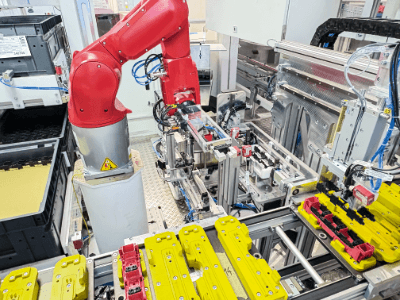
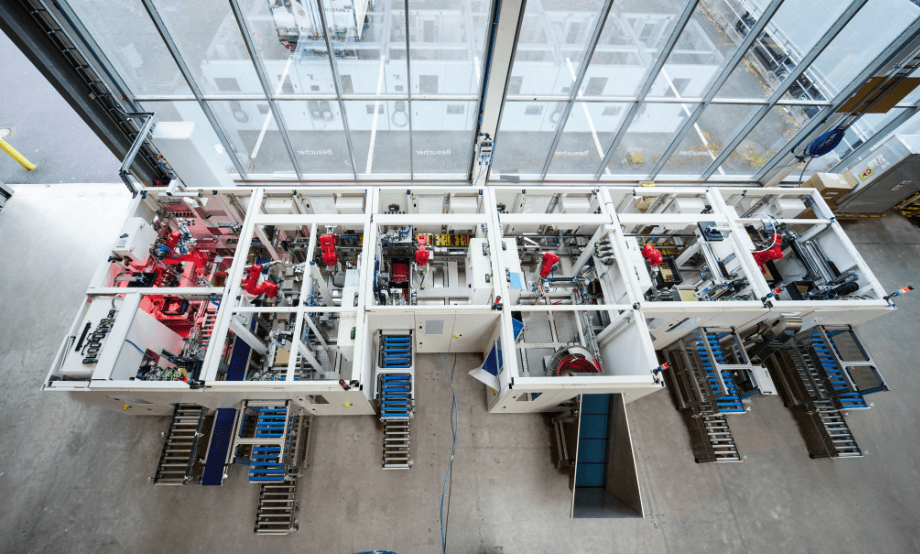
At its Heiligenroth production site, LKH manufactures parts and products for all kinds of applications and customers – from Porsche chassis components to the Rittal power distribution platform RiLineX.
Plastic in general is exactly the right material for numerous applications. It is indispensable, because it often has better properties than other materials. As regards sustainable plastics, I’m certain that, in the same way we now use high-quality recycled paper as a matter of course, we will also go on to make plastic from recycled materials or biopolymer even more than at present. These kinds of sustainable alternatives to plastics produced in the conventional way are currently still more expensive, but that will change in the medium term. Customers are increasingly asking us about alternative plastics so they can make their supply chains more sustainable.
Besides being sufficiently robust to survive in this economic climate, companies also need to be increasingly flexible – with regard to customers, suppliers and also regulations, which keep changing. US tariffs are one current example. As an SME, we can only make the most of our opportunities if we are always ready to change. As far as LKH is concerned, that means we must continue digitalising and automating our production operations, make use of new tools such as AI and, quite simply, have the ambition to keep on optimising things.
Well, as I see it, having the right mindset is vital. We always need to put ourselves in our customers’ shoes, think about the challenges facing them and consider where we can help. Which parts of the supply chain or value chain can we support? Only if we sit down with customers and enter into dialogue as partners at an early stage in the product development process will the crucial added value our customers need materialise.
We simply love the challenge at LKH! Especially in times when there’s a lot of uncertainty and fierce competition, we can prove ourselves as a plastic injection moulding specialist, really show what we can do, and offer our customers professional support throughout their entire product development process – from engineering and production through to logistics. That’s what my exceptional team and I are all about.
