Text David Schahinian, Steffen Maltzan ––– Photography
Mr Ludwig, data centres form the backbone of digitalisation – and Digital Realty is one of the leading providers on the market. What kinds of services have helped the company grow so big?
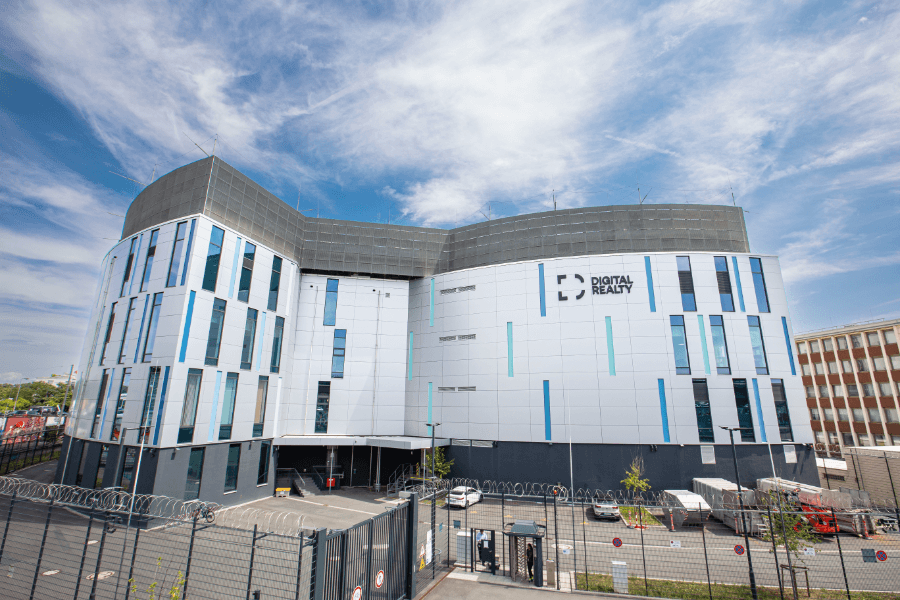
In short, we buy land, connect it to the electricity grid and fibre network, then construct secure buildings on it. We lease space in these colocation data centres to companies who operate their own IT there. In addition, we also provide connectivity services, for example to clouds and telecommunications networks. Around the world, we operate more than 300 of these data centres in over 50 cities.
Which customers use your services?
Our customer base is drawn from every sector, because almost every business model these days is based on digital processes. Heavily Internet-based organisations are particularly prominent, of course. I don’t just mean businesses that run infrastructure services or search engines, but also social media companies and streamers, for example.
So colocation data centres are absolutely essential?
They are. Telephone calls – including emergency calls – are just as much part of what these data centres do as IT processes for supply chains and electronic payments. High levels of availability and security are so important that you could say data centres count as critical infrastructure.
How does Digital Realty manage to stay ahead in this growing market?
Through predictive planning that is now paying off. Especially in Germany, we secured capacity at an early stage, and will expand this in coming years. We started here with our first data centre in 2001, and now we have 25 in Frankfurt alone.
READY FOR THE AI BOOM
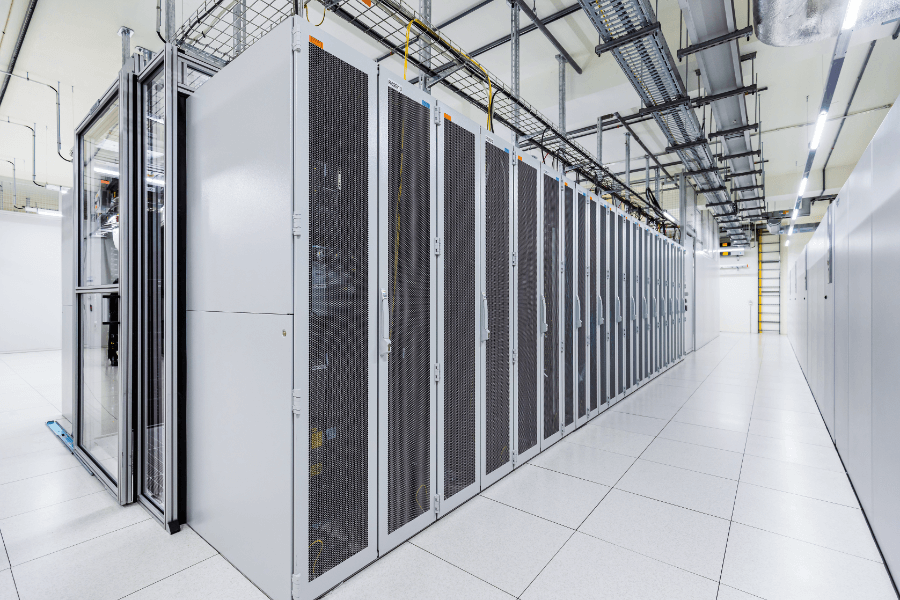
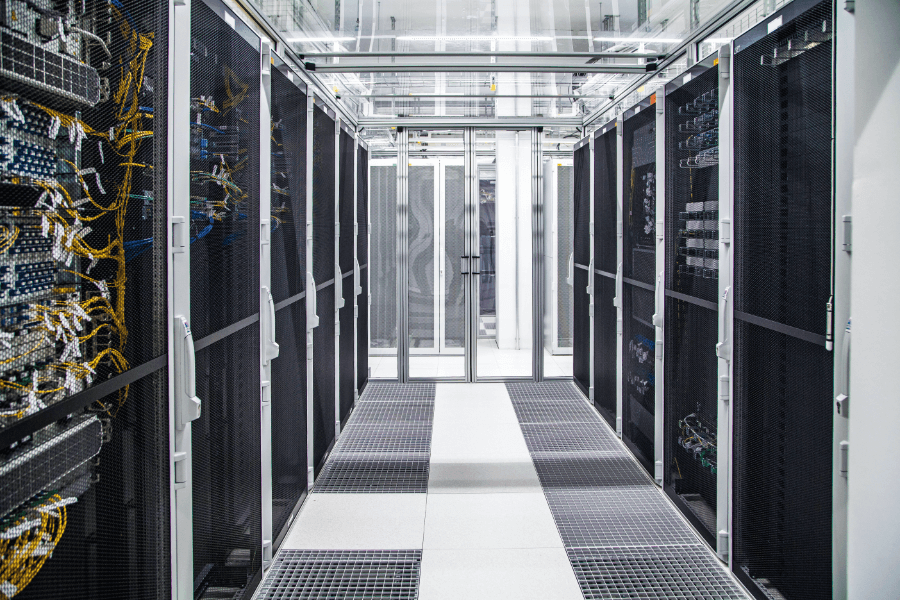
In Frankfurt, Digital Realty is building a campus with 11 new data centres – 200 MW of computing power, data centre space equivalent to 12 football pitches (90,000 m2 ), 16 km of privately owned power line to the nearest substation, and 500 people employed on the construction site. Rittal is supplying large volumes of IT infrastructure components for the campus.
What are the biggest forces driving the market?
Firstly, there is the fact that every aspect of life is becoming digitalised. People are using more and more digital services both privately and in their professional lives. Secondly, companies are increasingly relying on external data centres to ensure they can meet regulatory requirements such as Germany’s Energy Efficiency Act. It must be stressed that every organisation that switches to a professionally operated colocation data centre or a cloud is making a contribution to greater sustainability.
How can that be, since data centres consume so much electricity?
Data centres have a concentrating effect. While it is true that a lot of electricity is consumed in a small area, colocation data centres operate much more efficiently than if every company had its own data centre. The same can be said of the cloud. While desktop PCs generally operate at a maximum of 20 percent capacity, computers in the cloud reach as much as 90 percent.
What role does AI play in energy consumption?
The way I see it, this issue is still taking shape in Germany. Although all the new infrastructure we’re building in particular is AI-capable, the number of installations is still limited compared to the United States. That’s not unusual – developments in the US IT sector generally take some time to take hold in Europe. That’s where I see an opportunity for Germany.
What opportunity do you mean?
If you create framework conditions – from electricity prices and regulations to building up a base of experts – drawn up in a competitive way, Germany could become the leading AI nation in Europe and supply this major market from its own resources. For this to happen, however, politicians have to better understand that digitalisation is not an end in itself, but rather something that cuts across every part of life and needs to be considered as such – the number of AI applications will grow, be it in industry, fintech, insurance, research or medicine. We have made a good start, but there are still one or two places where we could do with releasing the brakes. In terms of IT infrastructure, the digital economy can pave the way – including in relation to data sovereignty.
What exactly do you mean by that?
If we build more data centres in this country, it will be easier for us to control which data we want to keep in Germany. The German state could also then act with greater sovereignty as a result. Although many efforts are being made across the EU, it is better not to become too dependent on other countries – even our neighbours. Of course, cutting red tape plays a huge part in all this.
On the other hand, you also benefit from the regulations that companies have to fulfil.
We need regulations within reason. Let’s stick with the example of the German Energy Efficiency Act. I can understand why the EU Energy Efficiency Directive meant certain limits had to be put in place that apply throughout Europe. If large user companies can’t meet these, or don’t want to, then there’s a high probability they will look for a colocation data centre, and that’s great for our business. However, with the Energy Efficiency Act, which affects us, too, Germany has gone its own way again. I’d have been happy if the government had just stuck with the European regulations.
Is there still enough space in Germany for new data centres?
Space might be a limiting factor, but we have already secured enough to meet our needs for the foreseeable future. The electricity supply is at least as important. We could start seeing bottlenecks in some regions in the next few years, which would slow down growth or cause relocations to other regions.
In your business, you are reliant on space and electricity, but also on a whole range of suppliers. What do they need to offer you?
Flexibility, consistent quality, reliability, speed – and good cooperation at a human level. It’s really important to me that we work together as partners. We’ve also been working with Rittal for over 20 years. The fact that the racks, for example, are manufactured in Germany ensures their quality and delivery reliability and is a boost to the location. Our colleagues in the technology departments also value the functionality of the system technology and the flexibility of the sales team. Safe handling is also important. In data centres, fewer injuries are caused by electric shocks – which you might expect – than by the sharp edges of enclosures or racks.
Looking forwards, what trend will define the near future of your business?
Technical complexity continues to rise, and the application landscapes in companies are becoming increasingly heterogeneous. At the same time, companies are unwilling to make any compromises in terms of fail-safe operation and efficiency. This demands a level of experienced orchestration that colocation providers can offer with connectivity services.