Text Sarah Benscheidt ––– Photography
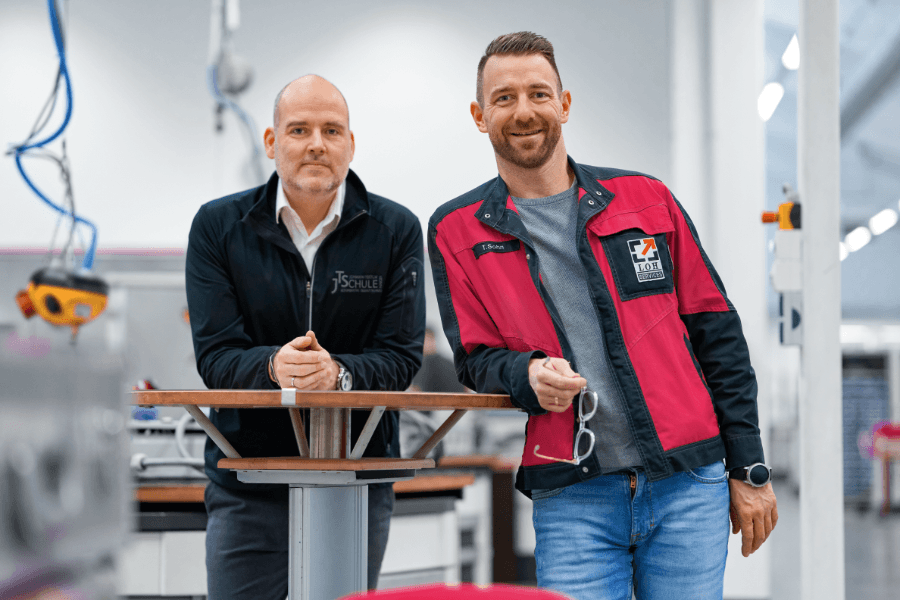
The future always starts in the mind. In Alexander Schüler’s mind, for example. This teacher at the Johann-Textor school in Haiger is practical and pragmatic, so when he became aware of a problematic situation, he launched a new project – one that is now very much catching on.
Schüler was concerned by the massive drop in the number of apprentices in Central Hesse. In 2024/25, for example, almost 2,900 apprenticeship places were left vacant in Hesse. Schüler spoke to his students, listened to them and did some research. As he now recalls, many were worried – not only about making the wrong decision, but also about the new, unfamiliar situations awaiting them in the workplace. The solution? Careers guidance that is more practical, more accessible and better geared to young people’s needs.
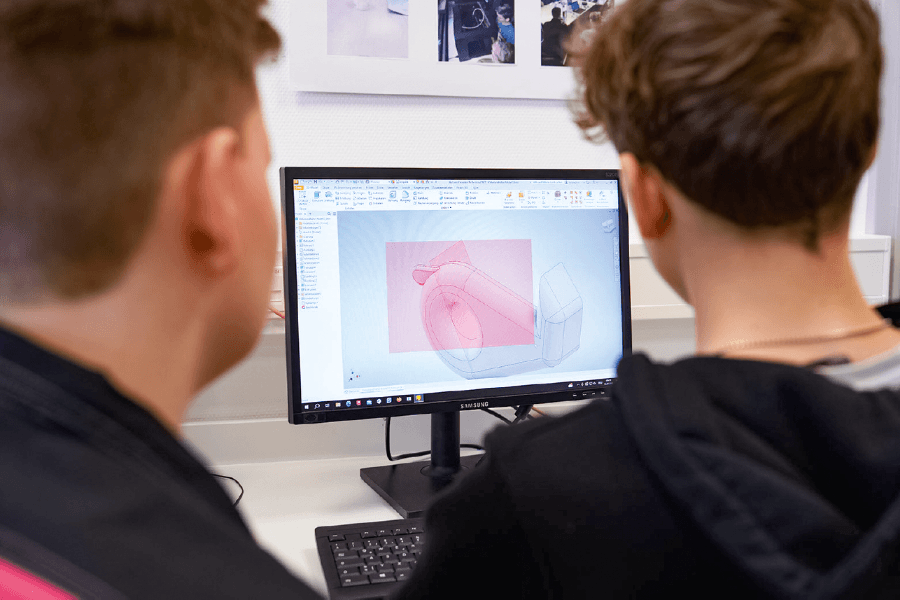
And that was how SchulePlus was born. The idea was to combine elective courses at school, such as CAD, with regular work experience at a company. The result is genuine career guidance and – if both sides are happy – a direct transition into an apprenticeship. It didn’t take long to find collaboration partners for the scheme in the region. One of the first was Rittal and the Friedhelm Loh Group. What started out as a single project has long since become an initiative – a movement – to change the education system and plug gaps in (vocational) training.
FROM TRADES TO THE CARE SECTOR
Students taking part in the scheme can spend two years gaining practical experience alongside their studies. The SchulePlus network now covers everything from industry and trades to administration and the care sector. A neat feature is the two-way nature of the scheme. Students go into companies, but the companies also effectively go into schools – they appoint apprentice mentors to help teach the elective courses and share their experiences. In the case of Rittal, one of these mentors is Tom Weinert, a year-three mechatronics apprentice who himself took part in SchulePlus and secured his apprenticeship on the strength of it. He now shares his knowledge with others.
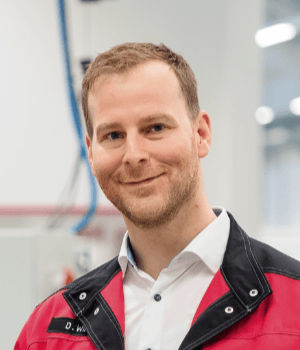
Why does the scheme work so well? “Hands-on experience – gained early on and without pressure – reduces doubt and increases the chances of finding a job that’s the right fit,” explains Daniel Wirth, Head of Training at the Friedhelm Loh Group and co-creator of the concept. “If you’re doing SchulePlus and realise the job isn’t for you during your trial period, you can switch to something else instead of dropping out later. At the same time, companies get motivated young talent who are already familiar with the company, the team and the work.”
In practice, very few students have switched. Nine out of ten participants in the pilot project subsequently started an apprenticeship at the company they had chosen for their SchulePlus programme. “Behind every SchulePlus place, there’s a real training place,” Wirth explains.
FROM PILOT PROJECT TO MODEL SOLUTION
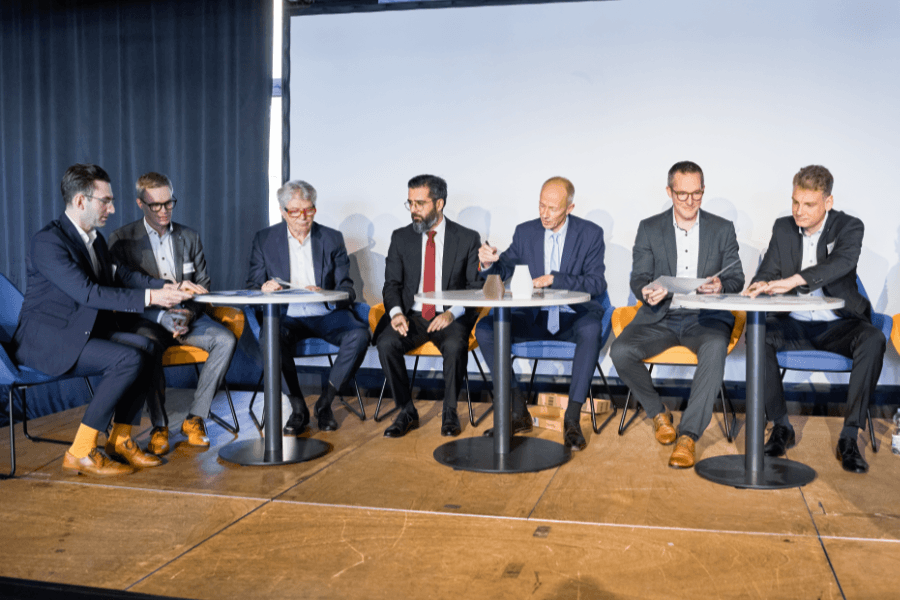
The pilot project that was launched in Haiger in 2021 and is unique in Hesse soon proved such a success that it is now to be made a fixture across the state. This decision was made official in late 2025 when high-profile businesspeople, politicians and educators – including District Administrator Carsten Braun, Minister of Culture Armin Schwarz and entrepreneur Prof. Friedhelm Loh – signed a declara-
tion of intent. A cross-sectoral group is currently working on scaling up the programme to take it to the next level. A SchulePlus office has been set up at the District Administrator’s headquarters and the companies supporting the scheme are soon to establish a SchulePlus association. “As the scheme grows, our responsibility does, too. Besides ensuring uniform quality standards, we want schools and companies to be able to aim high as they roll out a reliable model,” Wirth says.
In the Lahn-Dill district, following completion of the pilot phase, this is already happening successfully, including at the Goldbachschule school in Frohnhausen. Building on the success of the middle school models, the first grammar school – the Johanneum Gymnasium in Herborn – is soon to be integrated into the educational network. SchulePlus will be offered to grammar-school students in year 9 or year 11 to help them work out which direction they want to take. “They’ll be able to get a training place even before their final exams, or make firmer plans to start the StudiumPlus dual work/study programme,” explains Wirth.