Practice · Energy infrastructure
Tons of
speed
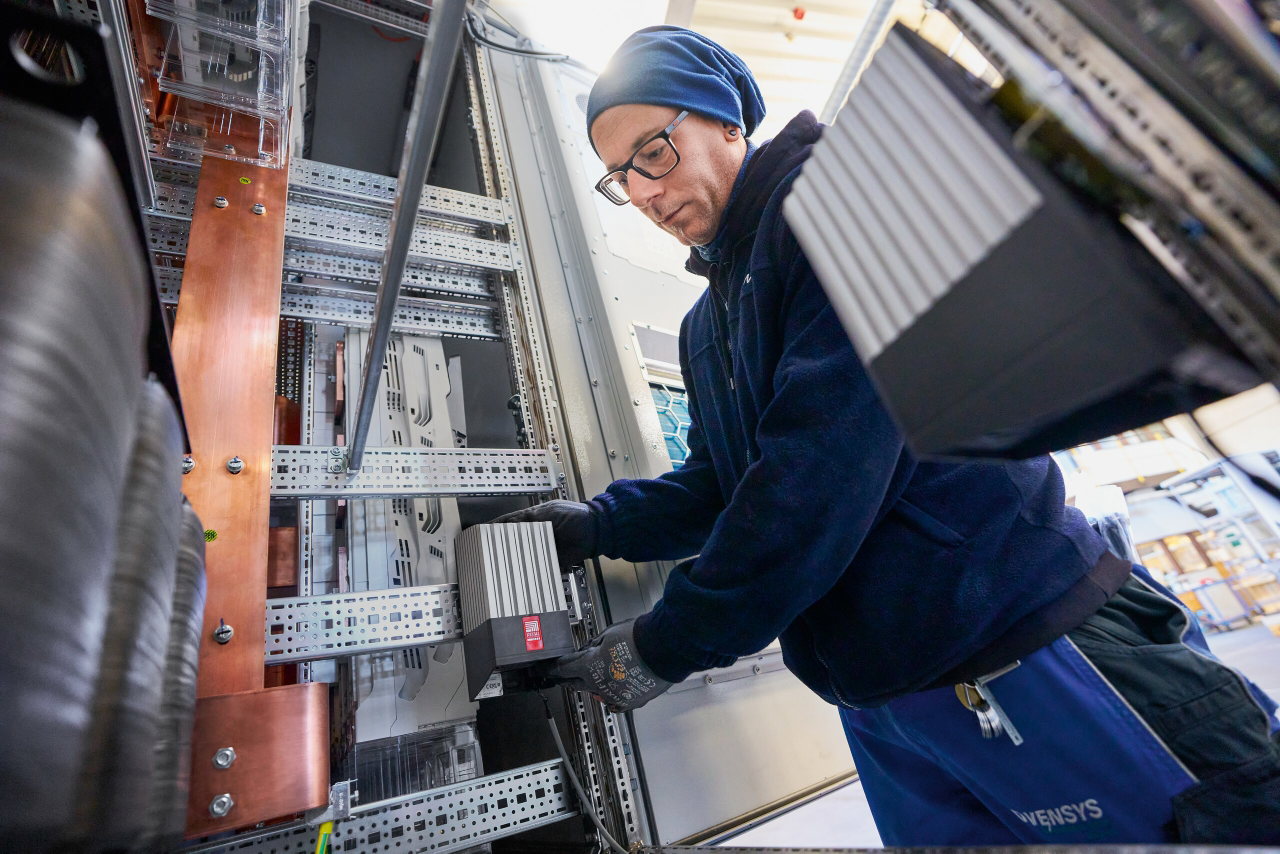
Vensys Elektrotechnik is supplying preassembled grid connection units for projects in Ukraine. These units link energy storage and photovoltaic (PV) systems to the medium-voltage grid in next to no time.
To ensure outdoor enclosures keep working in subzero temperatures, they have a twin-walled structure and built-in heaters.
The solution was developed using a practical approach that will be called for wherever energy infrastructure needs to be available faster in the future.
Text: Daniel Giebel
We wanted to do things differently and avoid having to build a substation, for instance,” explains Christian Müller, Product Manager at Vensys Elektrotechnik. The resulting solution is now being used, among other things, for energy projects in Ukraine. After all, the growing use of battery storage systems and renewable energies is ramping up demand for generation and storage capacities, and the effort and cost involved in planning, building, and commissioning the relevant infrastructure needs to be kept to a minimum.
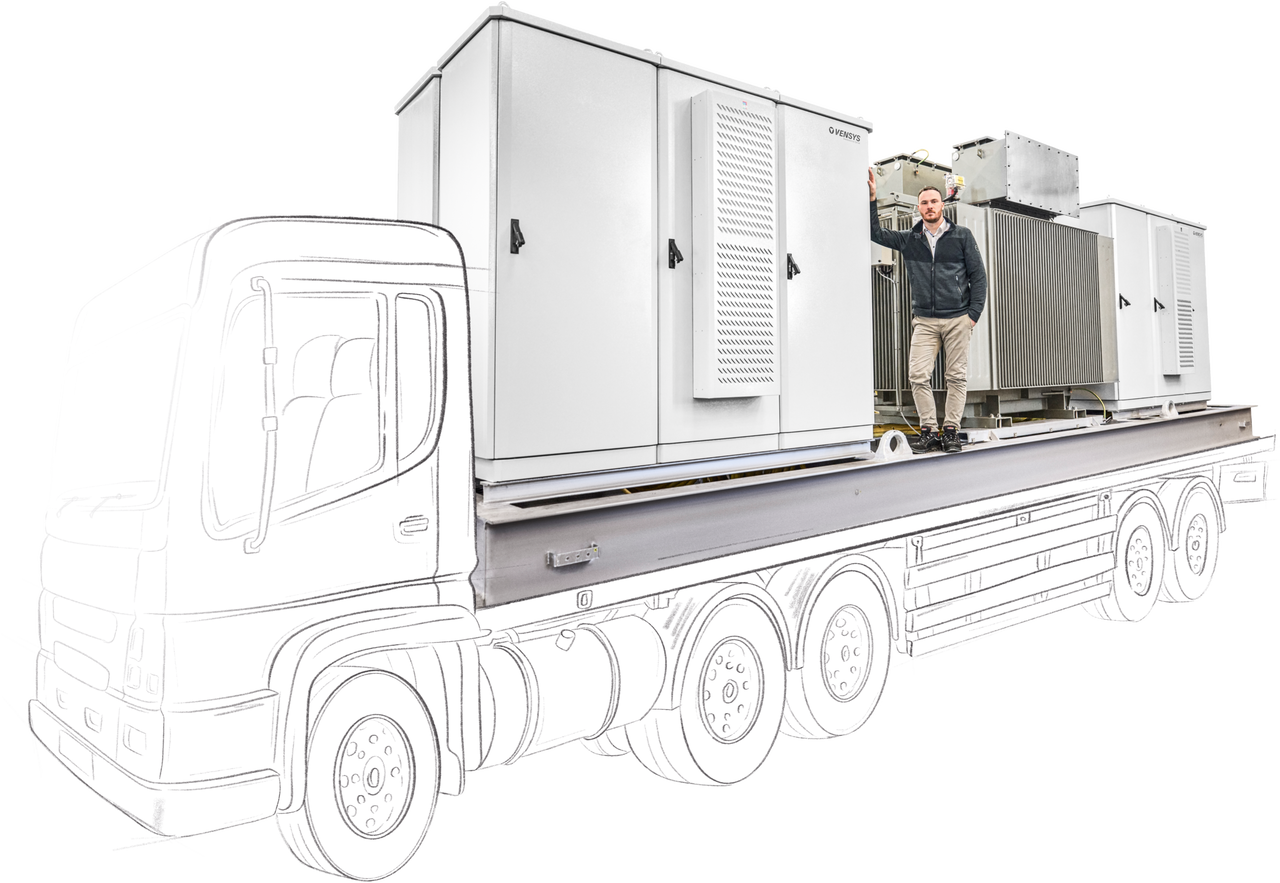
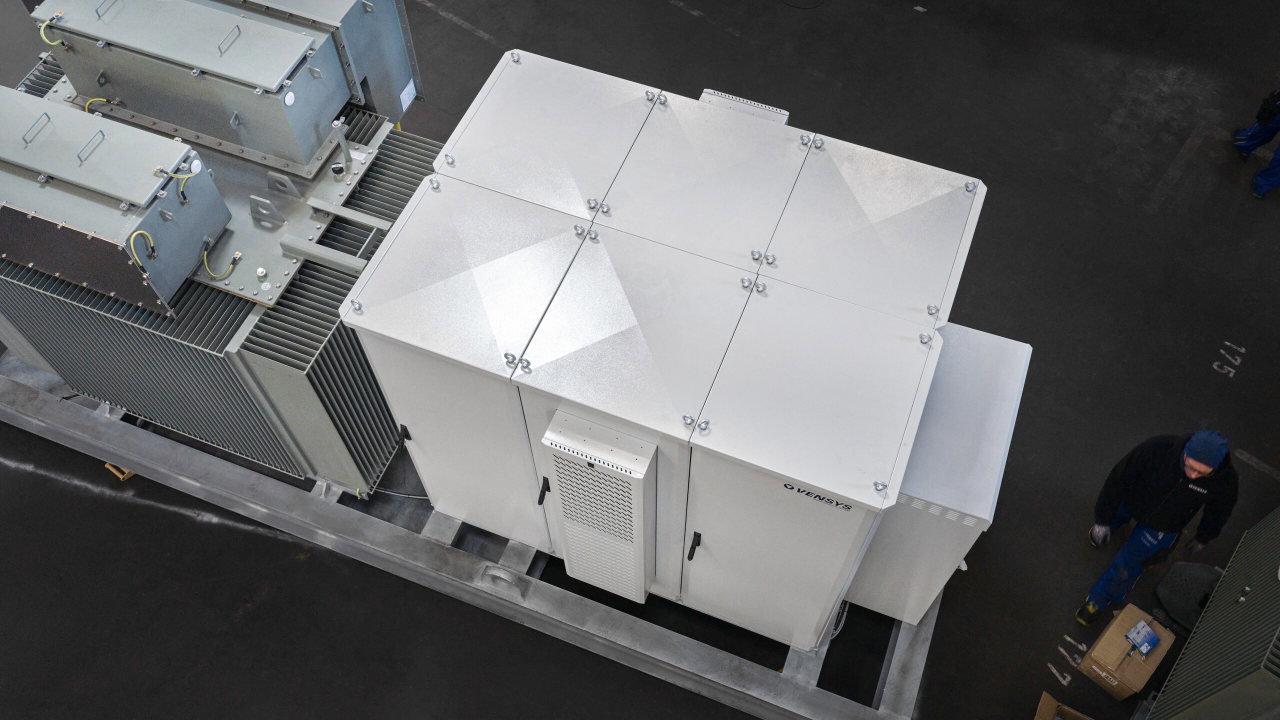
Instead of locating the transformer, distribution systems, and control technology in a building constructed specifically for this purpose, Vensys is therefore increasingly opting for a fully preassembled grid connection unit. This unit — which Vensys calls “VENSKID” — combines a transformer, a low-voltage main distribution board, and an energy management system and sits on its own steel frame.
“The stronger the growth of storage systems and renewables, the more important solutions based on a series concept will become.”

Christian Müller
Product Manager, Vensys Elektrotechnik
The direct route
The basic idea is as simple as it is effective. Preassembling and testing the solution at the factory means no resources are subsequently required for these tasks on the construction site, where the entire unit is simply positioned on the foundation strip, connected, and taken into operation. It goes without saying that permanent outdoor operation of the technology is a key requirement. Having carried out some market research, Vensys opted for modular outdoor enclosures from Rittal. Their twin-walled structure facilitates temperature management, which is an important factor — especially for applications that need to work reliably in everything from subzero to peak summer temperatures.
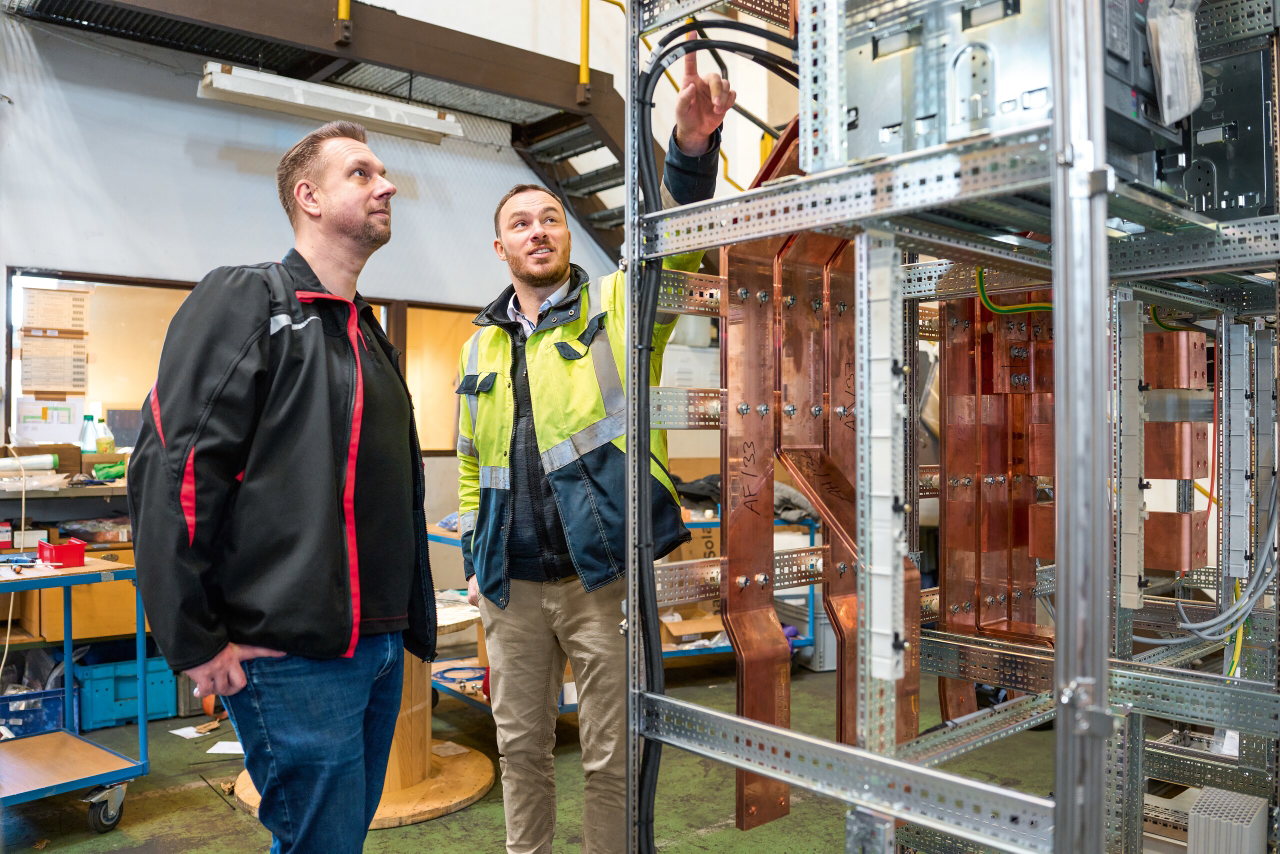
A well-established partnership of equals — Christian Müller (right) with Carsten Wessel, a member of the Energy & Power field sales team at Rittal.
Concentrated power
The solution is much more than a conventional power distribution system. It combines low-voltage power from the battery and PV inverters and routes this to a transformer, which increases the voltage to the required medium-voltage level. The scale involved is a key factor. “We’re not talking about a few kilowatts here. Outputs are as high as 8 MVA,” says Müller. Depending on the design, the system processes rated currents of up to 7,300 A. The largest variant can connect a total of 72 inverters — 36 for battery storage systems and 36 for PV systems. This creates a powerful interface between decentralized energy generation and the power grid.
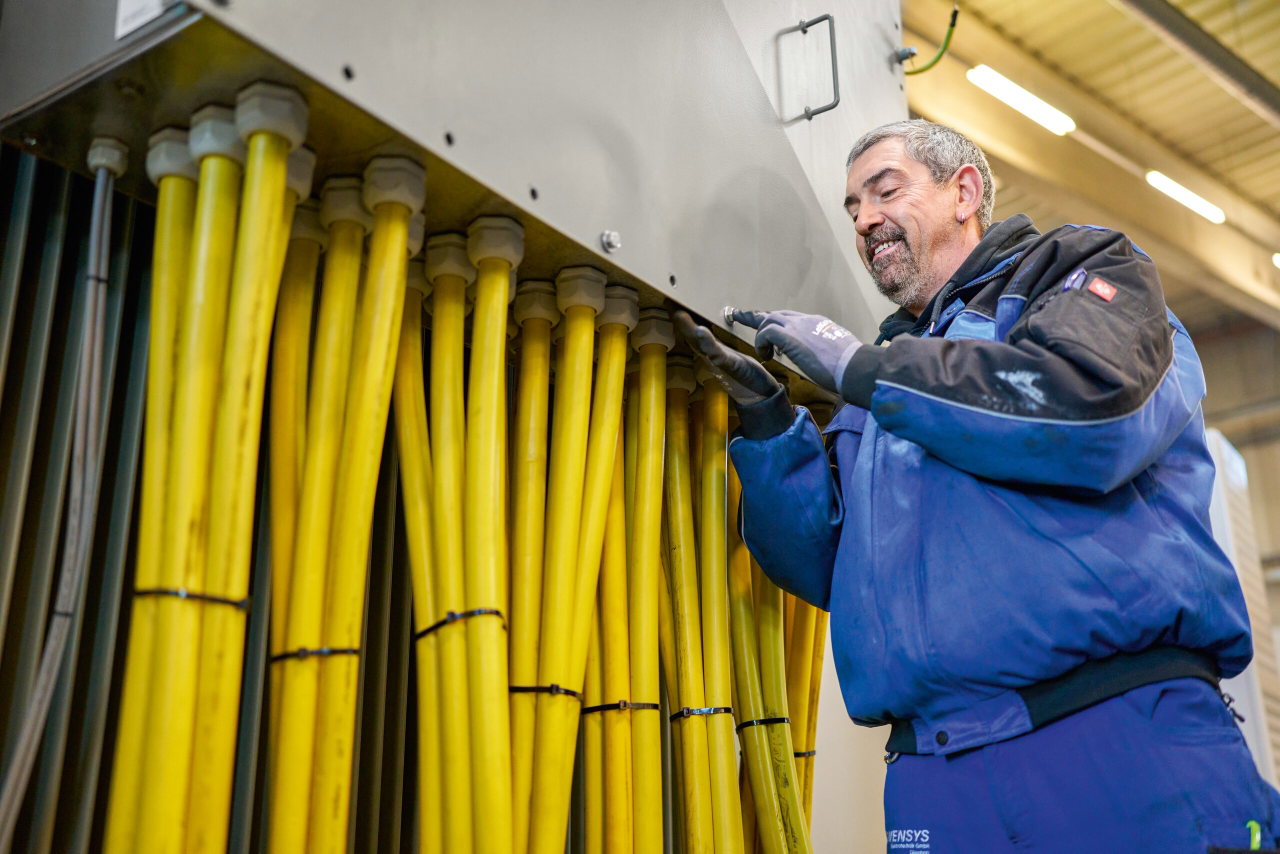
Depending on the design, the system can process rated currents of up to 7,300 A.
Ready to use on site
Vensys also has a clear approach when it comes to logistics. The grid connection units are designed so they can be transported on standard trucks. Even though the largest fully configured unit, including transformer, weighs up to 25 metric tons, its dimensions and weight remain within a range that enables comparatively straightforward transportation.
Energy infrastructure
In a nutshell
inverters
The largest configuration of a Vensys grid connection unit can feed the combined output of 36 PV and 36 battery inverters into the medium-voltage grid.
Scalable approach
Vensys systematically standardizes its solutions to ensure a cost-efficient concept. The enclosure platforms, frame systems, climate control, and numerous other components are identical across a variety of output classes. The main difference relates to the electrical configurations, meaning that outputs of 3.5 to 8 MVA can be achieved with a largely standardized platform concept.
Vensys sees this standardization as a key advantage. “The stronger the growth of storage systems and renewables, the more important solutions based on a series concept will become,” Müller explains. The projects in Ukraine represent just one of many applications. Companies operating and investing in energy infrastructure in Germany and other European countries are increasingly opting for energy storage solutions. The challenge is always the same — the energy must reliably get to where it is needed, and it must reach this location as quickly as possible.
Vensys Elektrotechnik
Forming part of Vensys AG, which develops and produces wind turbines worldwide, Vensys Elektrotechnik focuses on power electronics. Its portfolio includes preassembled grid connection units for battery and photovoltaic systems, as well as transformer and transmission stations for medium-voltage applications.
Next article
Steel and EU rules
How Stahlo is responding to new EU rules in the materials business.

Friedhelm Loh Stiftung & Co. KG · Rudolf-Loh-Straße 1 · 35708 Haiger · Germany · betop@friedhelm-loh-group.com

© Friedhelm Loh Group 2026 · be top – Magazine of the Friedhelm Loh Group