Practice · Steel and EU regulations
A PROTECTIVE SHIELD
WITH SIDE EFFECTS
Steel is becoming a strategic issue in Europe. Since July, the EU has been protecting its market with new import caps and the Carbon Border Adjustment Mechanism (CBAM).
For the world of trade and industry, though, this is making procurement more complex. Why is Brussels taking this course of action, and how is the industry dealing with the new situation in practice?
Text: Steffen Maltzan and Markus Huneke
Above the annual cap of 18.345 million metric tons for duty-free imports of steel products to Europe, things get expensive. Brussels has taken this step to build a protective wall around steel. The previous duty-free steel import quota has been cut by roughly half in the EU regulation effective since July 1, 2026. Companies that act quickly enough can import steel without paying an additional tariff. Once the quota is used up, though, goods become much more expensive. For imports from Asia or South America, for example, a 50 percent tariff is then levied on top of the standard third-country duty or anti-dumping duties. This tariff was previously just 25 percent and the quotas were far more generous.
Business becoming more difficult
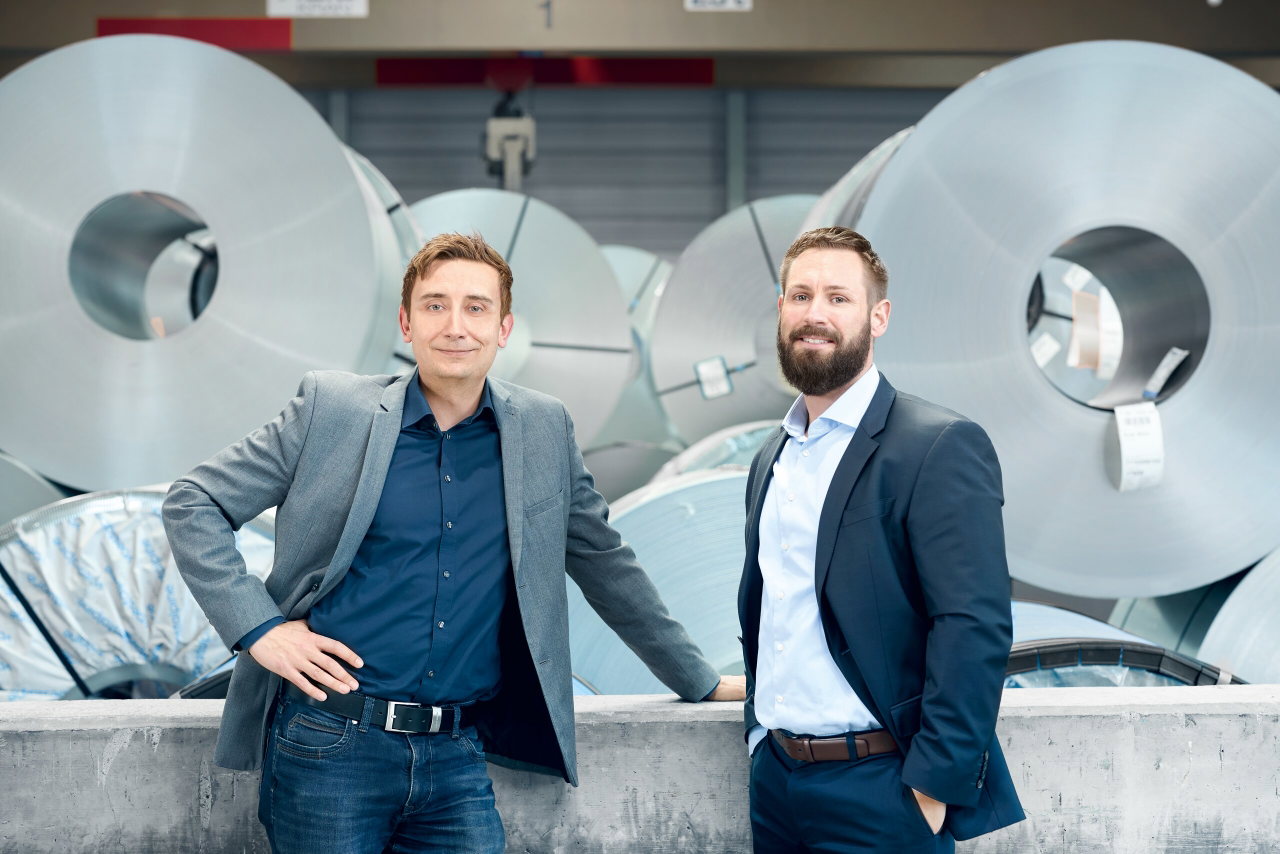
This protective shield for the market can also create a hurdle for European steel traders and the steel processing industry. According to Stefan Hoffmann, Head of Global Sourcing & Trading at Stahlo Stahlservice, it has made business much more difficult. The quota for category 4B — metallic coated sheets, which are in great demand in the automotive manufacturing industry — has been cut by around 65 percent, for example. “This more restrictive handling of imports didn’t come as a total surprise, though,” says Hoffmann. He reveals that the sector is being hit hard, but Stahlo was prepared. “For many years now, besides cultivating contacts with manufacturers, we’ve also been building up extensive expertise in foreign trade, port surveying via our partners, customs clearing, importing into the EU, and identifying supply routes that reliably permit large flows of goods using three different modes of transport,” Hoffmann adds. In most cases, this means the required volumes can quickly be secured for customers, or comparable solutions in Europe.
“We were quick to focus on mastering the processes associated with the CBAM and the quota system.”

Stefan Hoffmann
Head of Global Sourcing & Trading, Stahlo Stahlservice
Pressure on the EU
In principle, Hoffmann understands why the EU Commission has acted as it has and protected the market. Germany’s economy is faltering. The consequences of geopolitical restructuring and changing balances of power are particularly visible on the steel market. One reason for the trade policy is the falling demand for steel in Europe, combined with the fact that the EU remains an export target for global trade. How has it come to this? The automotive sector, once the driving force of German industry, is foundering. And the mechanical engineering industry, which was a world champion exporter for decades, is also stagnating. Excess capacities are growing worldwide. The amount of steel now being exported by China is roughly equivalent to the amount being manufactured throughout the EU. This is exerting pressure on prices. The situation is being exacerbated by the erratic tariff policy of the USA, which has largely closed off its own market. As a result, Europe has even fewer export options and, at the same time, is an obvious destination for redirected Asian steel. The EU has responded to this pressure.
Carbon pricing — a second protective wall
Alongside the new protection regime for imported volumes that came into effect on July 1, the EU’s Carbon Border Adjustment Mechanism (CBAM) has added a second level of regulation. The CBAM applies carbon pricing to imported steel to stop carbon leakage — the relocation of steel production to non-EU countries to benefit from lower climate costs. Consequently, steel trading now involves complex calculations and time-consuming reporting obligations.
The new regulations have sent existing market mechanisms into a spin. It’s also unclear how the CBAM, which came into full effect this year, will affect prices. That’s no good for planning certainty.
EU steel market under pressure
Adverse factors
Excess capacities
Global glut of steel
Falling demand
Industry, construction, automotive
US tariffs
Steel being redirected to the EU market
EU protective measures
CBAM
Protecting investments in zero-carbon production
Duty-free quotas
Reduced for defined countries and products
Additional tariffs
Third-country and anti-dumping duties
Stahlo handling imports
What does all this mean for Stahlo and its customers? “We’ve kept a close eye on discussions about the regulations. We were quick to focus on mastering the processes associated with the CBAM and the quota system,” says Hoffmann. As a CBAM applicant approved by the EU right from the start, Stahlo is officially authorized to import goods into the European Union from non-EU countries. This includes securing procurement channels for steel certified as being clean. “By handling the entire import process for our customers and keeping an eye on everything, we’re making business as simple and stable as possible for them,” Hoffmann adds reassuringly.
Next article
Supply chains in the plastics industry
LKH relies on intelligent strategies — and the FLG — to safeguard its supply chains.
Friedhelm Loh Stiftung & Co. KG · Rudolf-Loh-Straße 1 · 35708 Haiger · Germany · betop@friedhelm-loh-group.com

© Friedhelm Loh Group 2026 · be top – Magazine of the Friedhelm Loh Group