VX25 manufacturing
A Standard at
World-Class Level
Without in-house manufacturing, innovation, and speed, it is not possible to be successful in China.
Radical localization is required. To channel even more “China Speed”, Rittal has invested heavily in expanding its production in Shanghai — and in the VX25 global standard.
They roll almost silently. Around 30 pairs of rollers lined up one after another rotate continuously in sync. A flat, perforated strip of sheet steel moves almost invisibly between them. Unwound from a large coil, it passes step by step through the rollers. Each pair of rollers bends the sheet almost imperceptibly a little further. After roughly 30 meters, the roll-forming system produces a complex steel component — the frame profile of the VX25 enclosure. Welding robots then join the profiles to create a finished enclosure frame. A three-stage surface treatment process with painting provides maximum corrosion protection. After assembly and packaging, the VX25 reaches Chinese machine and plant builders within 48 hours — and is then deployed in industrial and IT environments at companies such as Volkswagen, Mercedes-Benz, BYD, Huawei, and many others.
Speed and deep localization
The new production line at the Rittal plant in Shanghai is impressive. It stands for speed — something already evident when the new hall was built two years ago. The existing factory and logistics space was expanded by adding another 10,000 m² of production space spread over two floors. The team is proud of the record construction time. After just eleven months, the first VX25 rolled off the line. “In Germany, people would probably still be discussing the groundbreaking ceremony with the authorities,” says Michael Galler, COO Asia with Rittal, with a wink.
The German manager has worked for Rittal China for 16 years and has experienced and shaped the plant’s dynamic development firsthand. “Today, we have a very high localization rate in China — we do almost everything at one site,” says Galler. Most small enclosures, large enclosures, and cooling units are produced locally. Only 20 percent are imported. “Manufacturing around 5,000 standard products in China is extremely important for us so we can keep pace with the high speed of the market and of our customers,” explains the former Audi and Seat employee. “Without in-house manufacturing, without innovation, and without speed, you cannot be successful in China,” he continues.
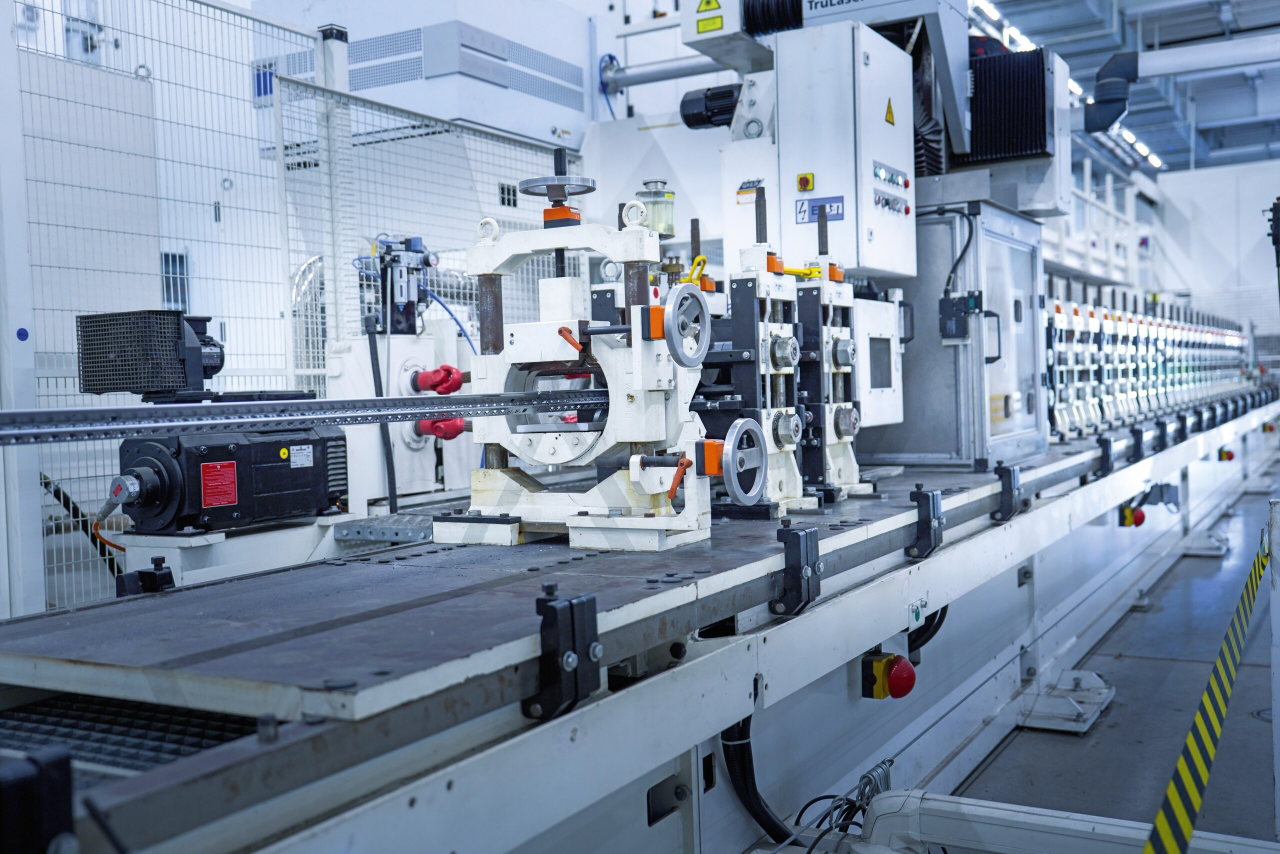
The roll-forming system turns sheet steel strips into VX25 frame profiles in seconds.
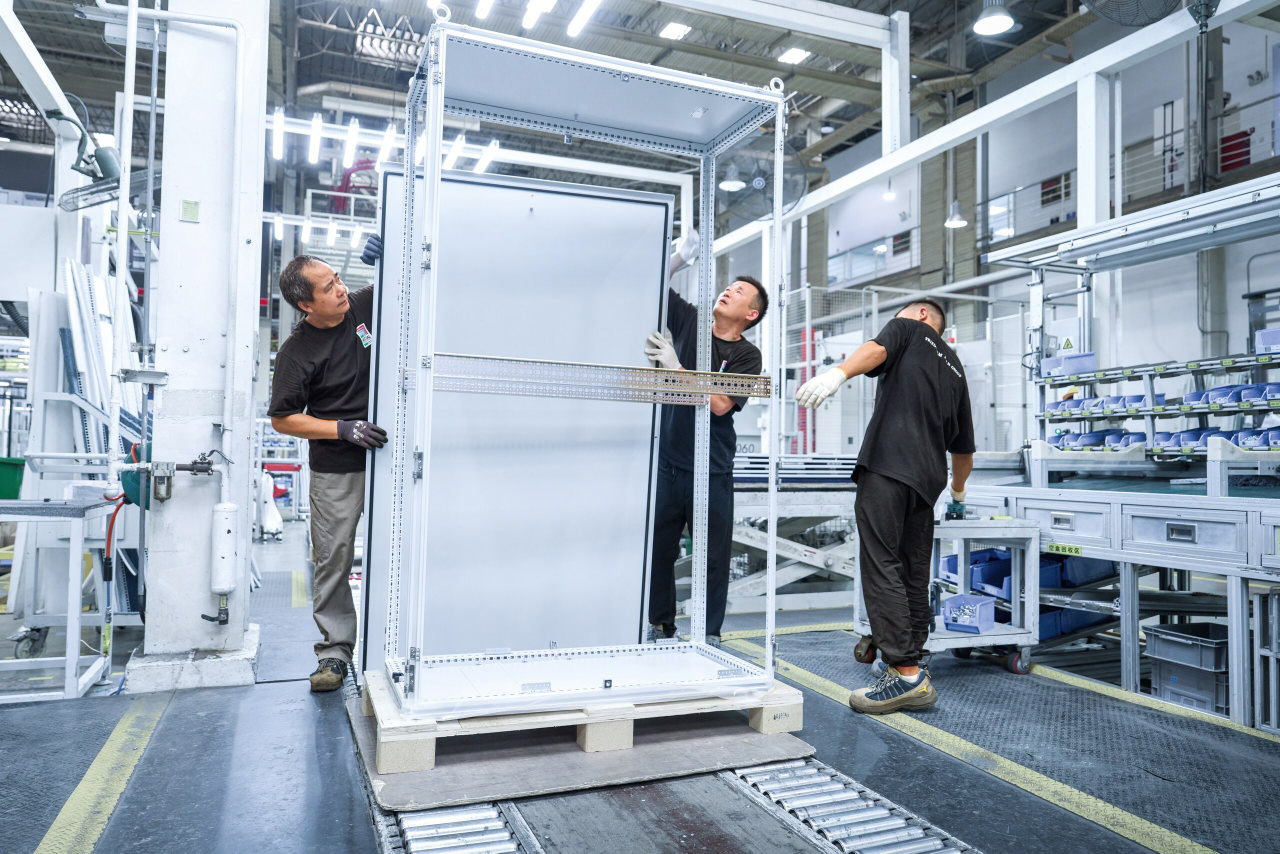
On assembly lines, VX25 frame systems are built into complete large enclosure systems with door, side, and rear panels as well as mounting plates and punched sections with mounting flange.
“We have achieved a very high localization rate in China.”

Michael Galler
COO Asia, Rittal China
Video
Video tour of the plant
This content is blocked by your cookie settings. 🍪
You can change this in the cookie settings or accept and load it for this visit only.
Video: Friedhelm Loh Group (movingimage) – only loads once you have given your consent
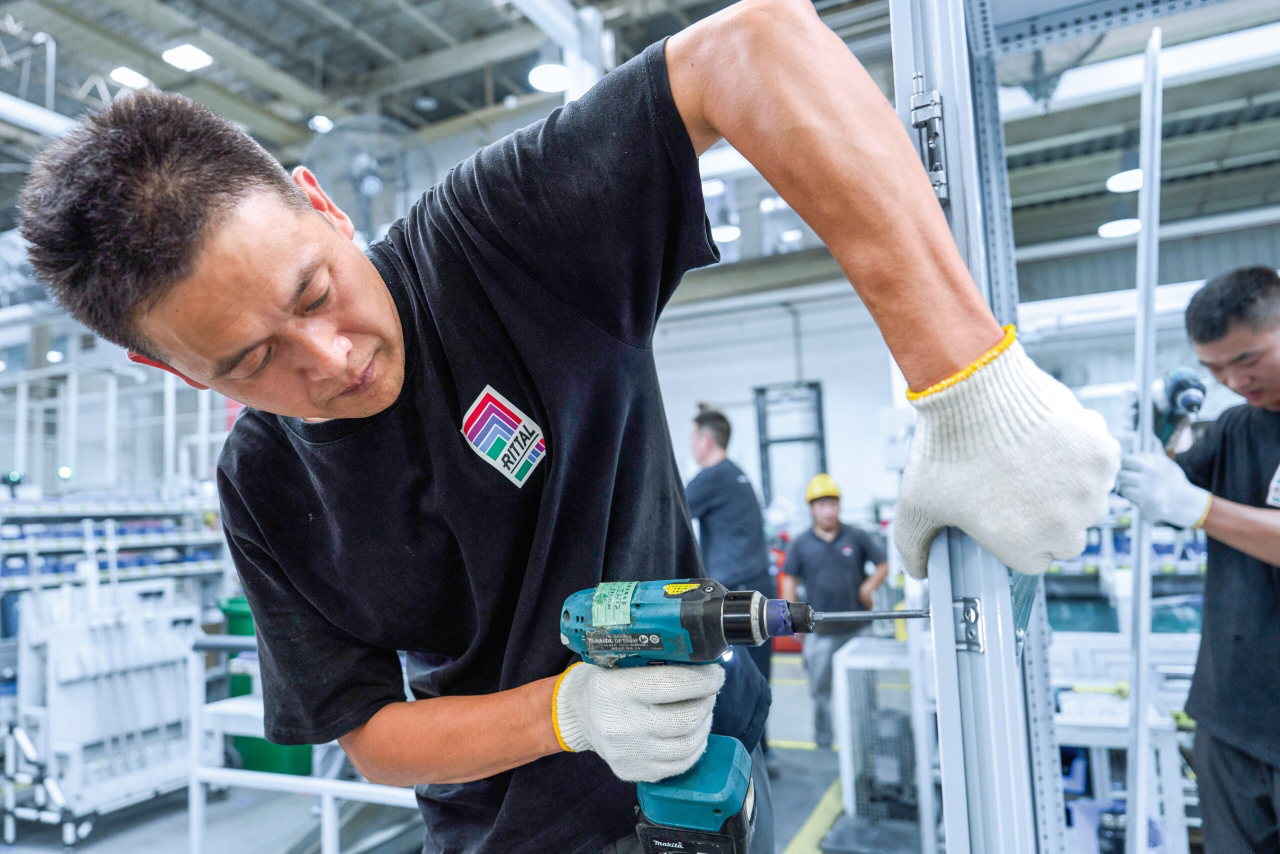
Assembly at the Rittal plant in Shanghai
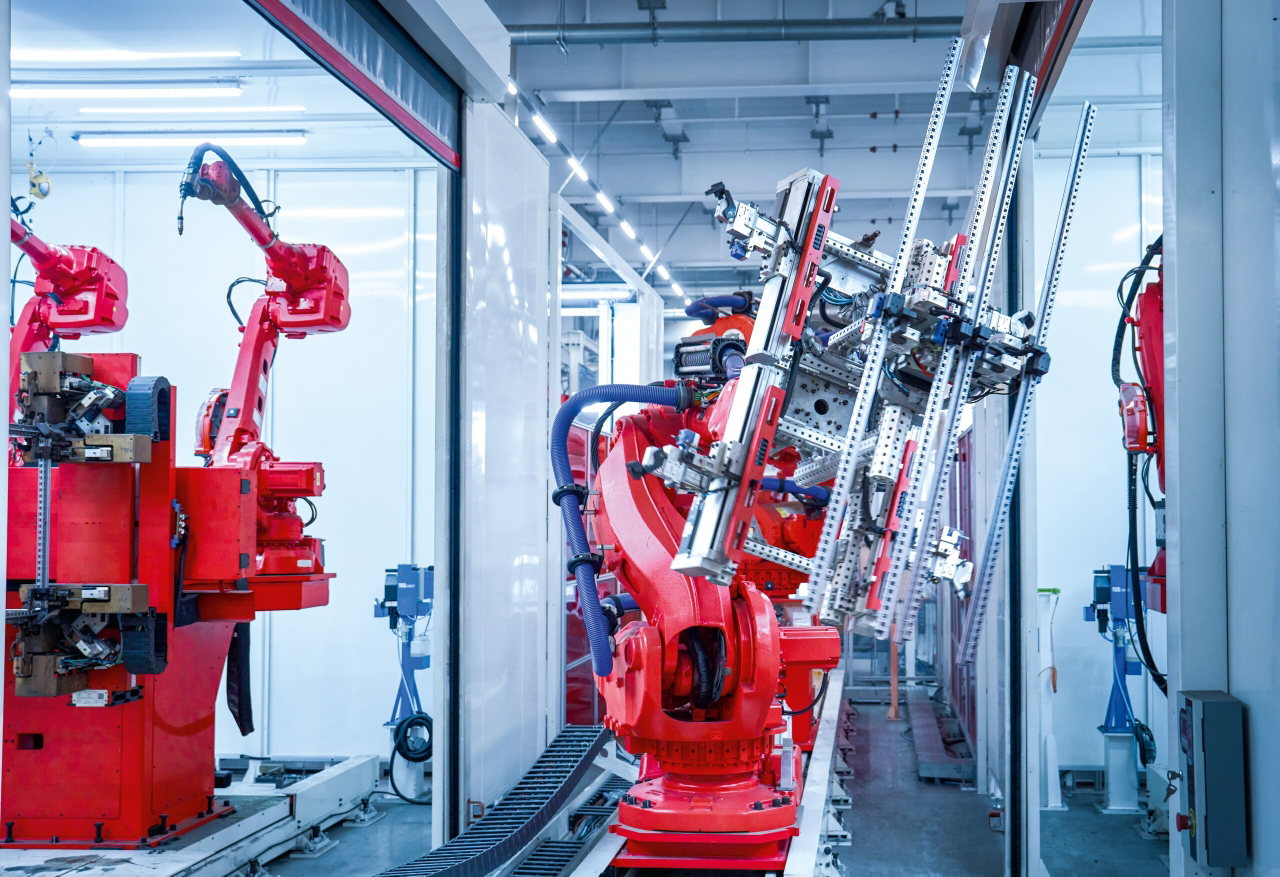
Welding robots at the Shanghai plant automatically join frame elements of the new VX25 enclosure, ensuring speed and maximum production quality.
“Made by Rittal”
And there is more to come. A new production line for stainless steel enclosures is scheduled to go into operation at the end of the year to serve market requirements even better. “Our customers receive the same products from China that they are used to from Germany or anywhere else in the world. So there are no products ‘Made in China’ — only ‘Made by Rittal’ and benefiting from the same certifications and the same product, service, and logistics quality that customers know worldwide,” Galler explains.
Excellence with flexibility
But how does Rittal manage the complexity involved in producing such an extensive product range? Unlike many other plants that primarily focus on large-scale series production, the Shanghai plant is designed to balance efficiency and flexibility. “Here, we can quickly adapt to different customer requirements, cover a broad product range, and process both standard and customer-specific orders — while still ensuring reliable 48-hour delivery performance,” says Michael Tan from the Plant Operations team. Operational excellence is driven by a highly integrated production system that combines lean manufacturing, standardized processes, and data-driven management. This creates efficient material flows, optimized production planning, and consistently high productivity across the entire value chain. “We also have a worldclass quality management system with robust process controls aligned with the Rittal global standards,” says the manager.
“We can respond quickly to different customer requirements.”
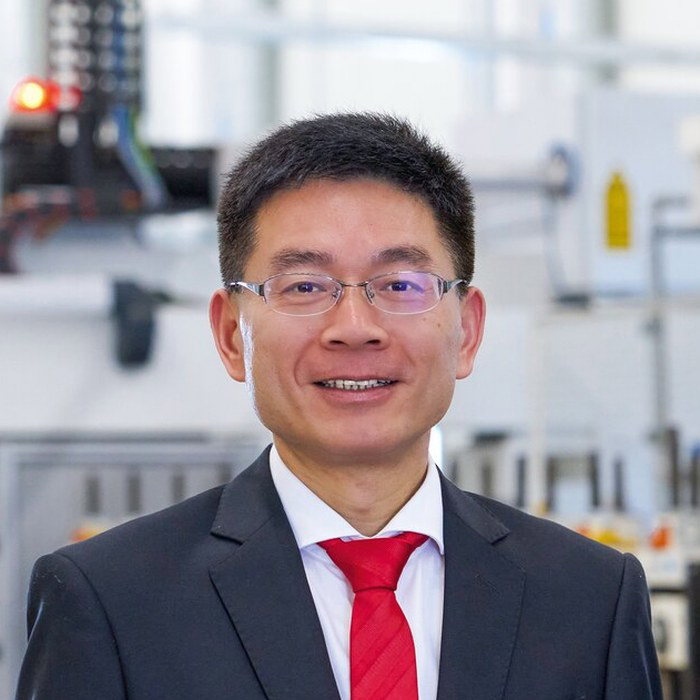
Michael Tan
Plant Operations, Rittal China
System is the advantage
The intense competitive pressure in China remains extremely challenging. “The customer and competitor structure here is completely fragmented,” says Galler. “In Germany, there may be five or ten competitors — in China, we have hundreds, perhaps even thousands of small competitors,” he continues. The COO expects the market to consolidate in the future. Even so, the intense cost pressure will remain. “Our strength is technological leadership, which goes far beyond the individual enclosure,” Galler emphasizes. Rittal customers have access to the largest system portfolio in the world — racks, enclosures, power distribution and cooling technology, and more than 5,000 accessories. “Engineering solutions from Eplan and machines from Rittal Automation Systems, which bring even more speed to machine and plant building, are another advantage. No one else has that. It makes us unbeatable in the market,” insists Galler. This integrated solutions expertise is especially valuable when Chinese companies need rapid growth momentum and are looking for solutions that can make their value-creation processes even more efficient.
Reliability counts
In China, a country roughly the size of Europe, another success factor is also coming to the forefront — the operational ability to deliver. Delivery reliability is often more important than a lower price. In Chinese business, reliability, trust, and planning certainty play a central role alongside quality and speed. Customers expect promised deadlines to be met. Galler puts it this way: “For our customers, trust is the foundation of business success. Do what you say and say what you do is the basic principle that applies now more than ever.”
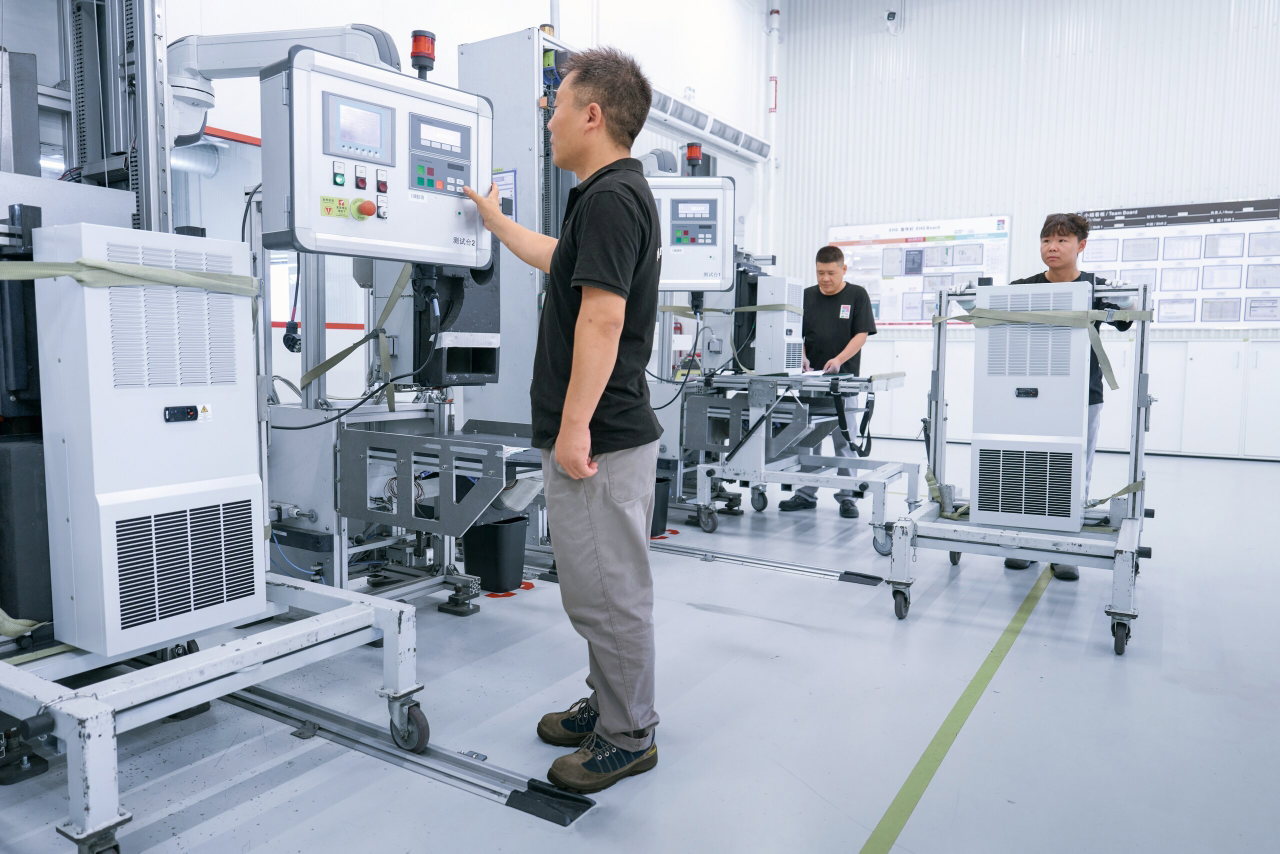
At the Shanghai plant, Rittal produces cooling units developed specifically for the Chinese market.
Next article
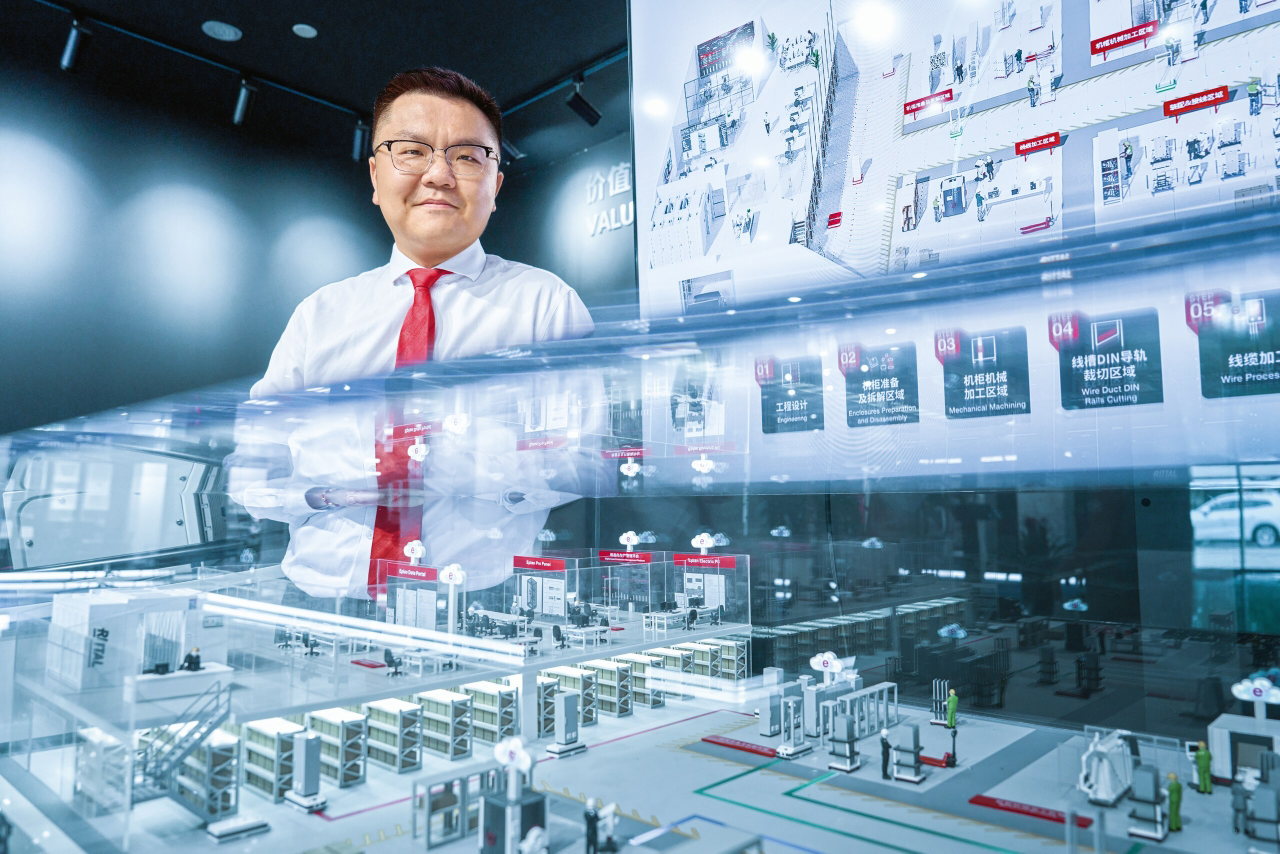
Eplan and Rittal Automation Systems
Eplan, Rittal, and Rittal Automation Systems: Bosco Peng and Bill Qin on end-to-end processes.

Friedhelm Loh Stiftung & Co. KG · Rudolf-Loh-Straße 1 · 35708 Haiger · Germany · betop@friedhelm-loh-group.com

© Friedhelm Loh Group 2026 · be top – Magazine of the Friedhelm Loh Group