Practice · Building automation
A head start
on preplanning
Just one year to manufacture 300 enclosures, each one unique, for a highly complex production facility — Siemens Smart Infrastructure in Dresden was in no doubt that using conventional methods would make a project of this size all but impossible.
The solution was a systematically digitalized process extending from preplanning through to automated enclosure production.
Text: Gerald Scheffels and Birgit Hagelschuer
Even before the project officially started, the team headed by Rico Gollmann, Lead Engineer at Siemens Smart Infrastructure, was looking for ways of significantly speeding up preplanning work for this major building automation project. It opted for Eplan Preplanning, which resulted in the creation of a central database on the basis of data point and function lists for everyone involved in the project. The next step is adding automation schematics, product information, and data point attributes. The Siemens Combination Technology Plant in Chemnitz (WKC) can then prepare the wiring schematics on a partly or fully automated basis.
This has a significant impact, cutting the time needed to produce the wiring schematics and define the main focal points for automation from several days to just a few hours. It also creates the basis for systematically working in parallel.
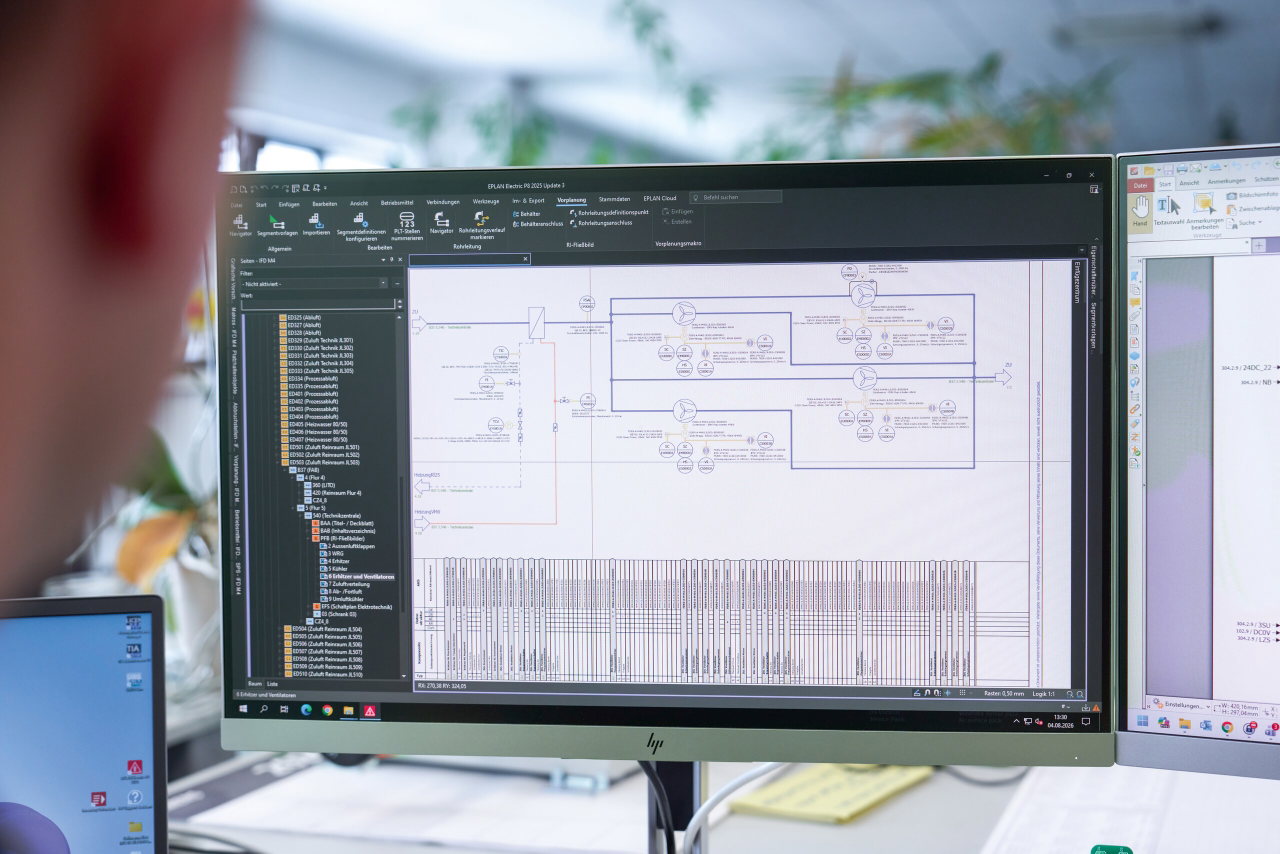
Eplan Preplanning creates a centralized data base for large-scale building automation projects.
“We’ve got a standardized, up-to-date database for each enclosure, with total data continuity right through to completion.”

Rico Gollmann
Lead Engineer, Siemens Smart Infrastructure
Overcoming complexity and moving faster
The project’s dimensions are impressive — the planning stage alone involves over 30,000 data points, just under 12,000 field devices, and around 50,000 planning documents. Digital preplanning made it possible to generate cable and wire-pulling lists, initiate test processes, and even start programming work while other planning steps were still underway.
Specially developed configurators are providing additional support. By automating standard tasks, they are significantly reducing the amount of manual engineering work. Besides making processes faster, this is also improving process quality and reliability.
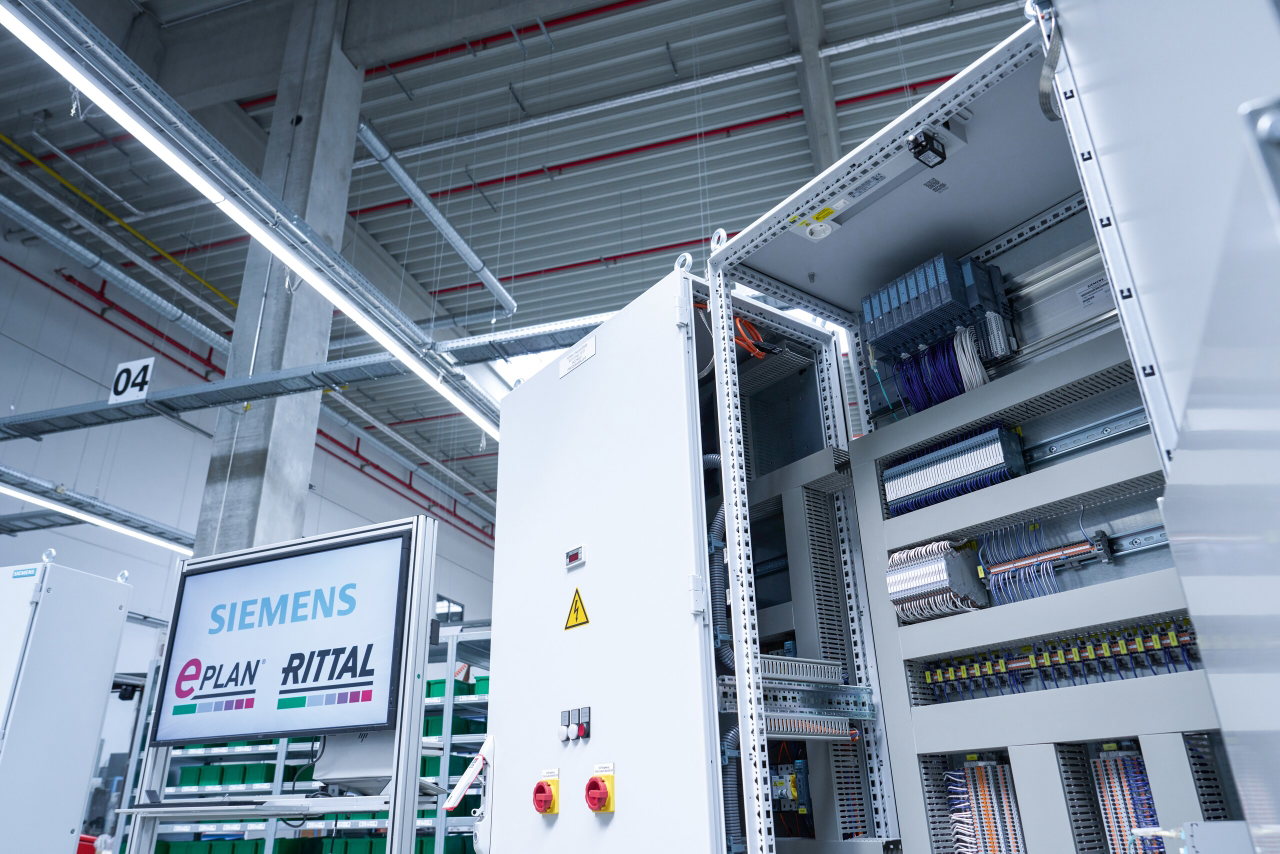
Consistent data ensure a smooth-running flow of information from planning to enclosure manufacturing.
One enclosure per day
Once preplanning work is complete, Siemens Smart Infrastructure hands over the data to the Siemens WKC, where the digital process chain continues seamlessly. Uniform standards for components, macros, and labeling ensure wiring plans can be produced on a largely automated basis.
At the Siemens WKC, materials management, scheduling, and production teams all access the same preplanning data. The resulting continuity enables short response times and efficient change management — a key advantage for projects taking place at the same time as construction work.
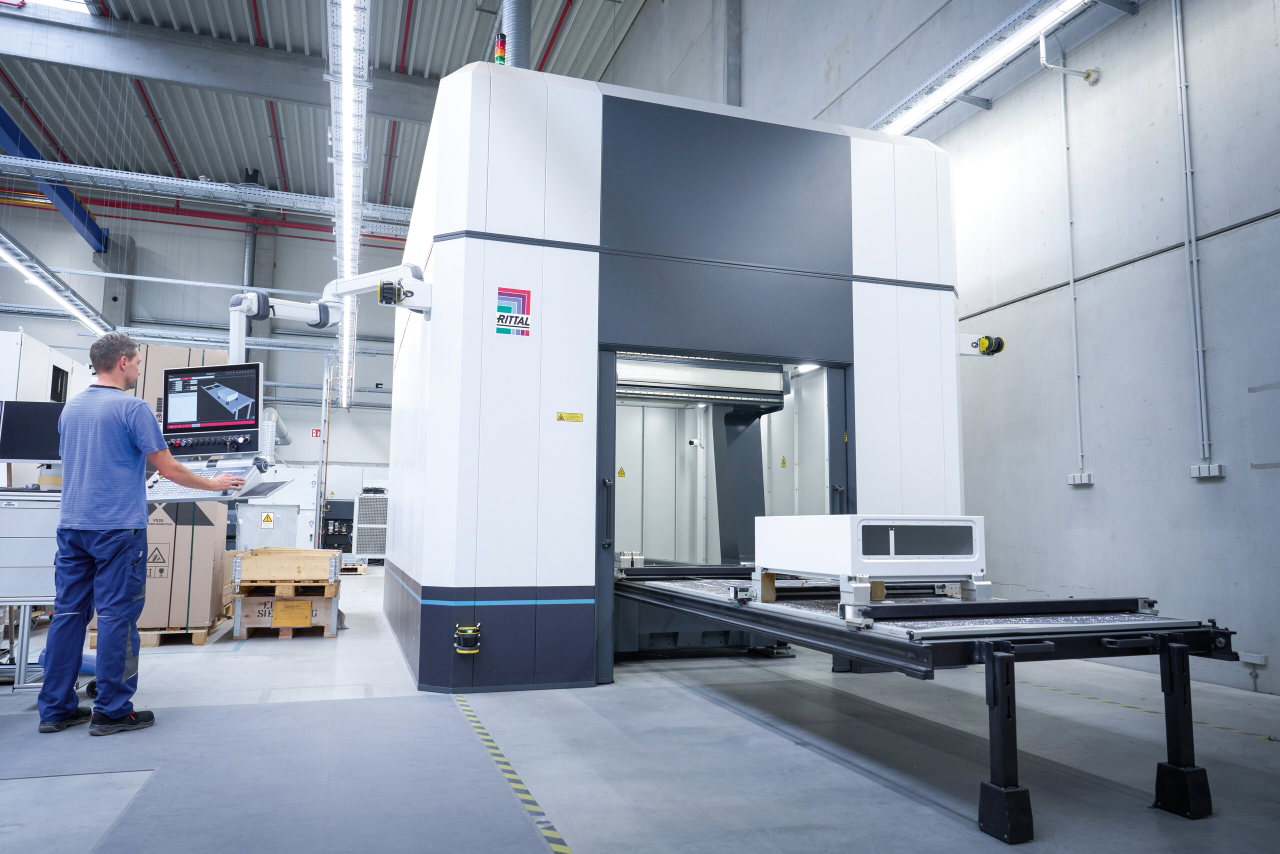
The use of Rittal enclosures is making a major contribution to speed and continuity. “Rittal provides us with a very flexible service, even in the case of special solutions,” says Uwe Zimmermann, Vice President Design Engineering at the Siemens WKC. Standard enclosures are supplied daily via the logistics center in Gera, within 24 hours. At the Siemens WKC, these are then customized on three Perforex MT machines or a Perforex LT. The machining data comes from Eplan Pro Panel and helps ensure quick, automated production.
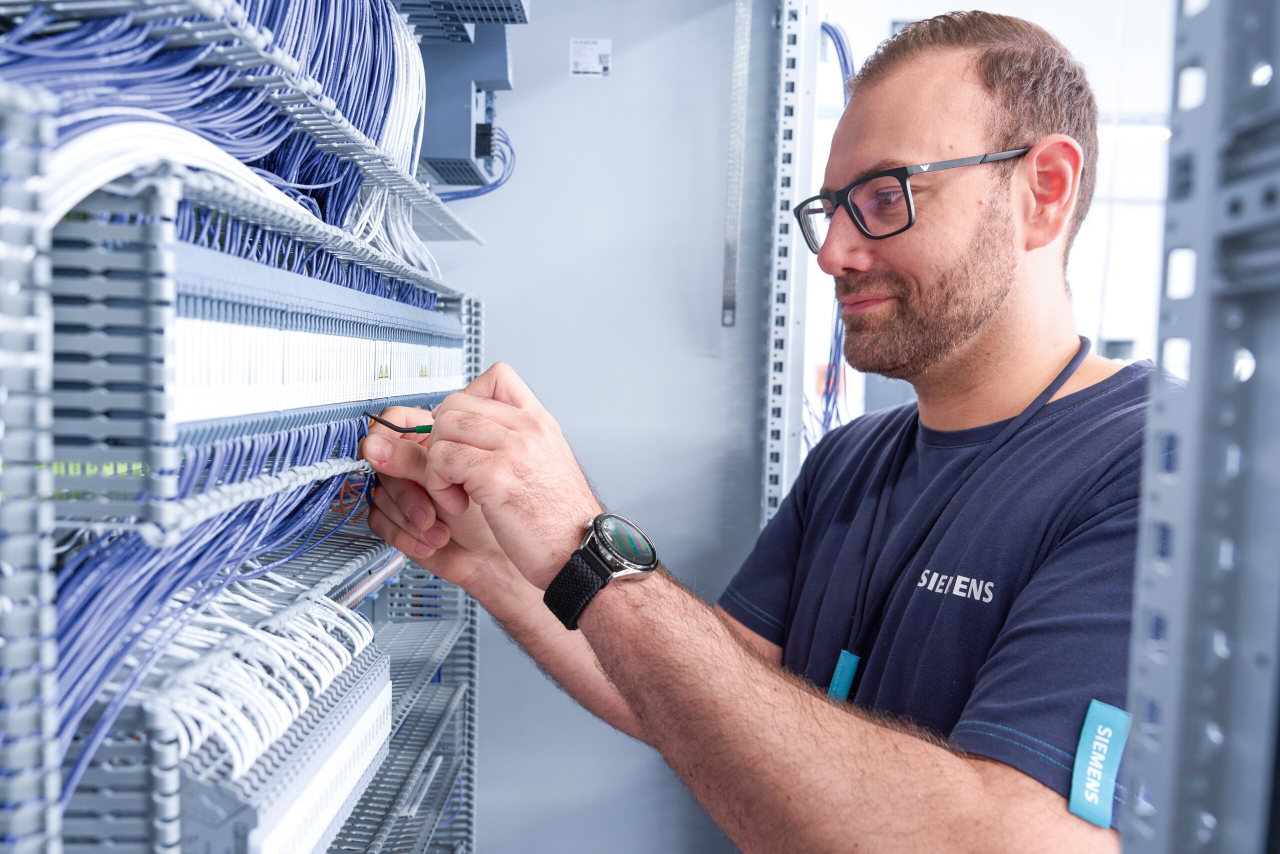
“We see lots of potential for making building technology and building automation more efficient. The necessary technology and capabilities are available.”

Uwe Zimmermann
Vice President Design Engineering, Siemens WKC
Model for the future
The effectiveness of this approach is particularly evident from the fact that it was possible to plan and manufacture a further 30 enclosures within the project timescale, without this disrupting the overall organization. The people involved in the project see that as more than just a successful outcome. It also demonstrates the potential of end-to-end digitalization for building automation — from faster progress, fewer errors, and enhanced flexibility to improved collaboration across companies and sites.
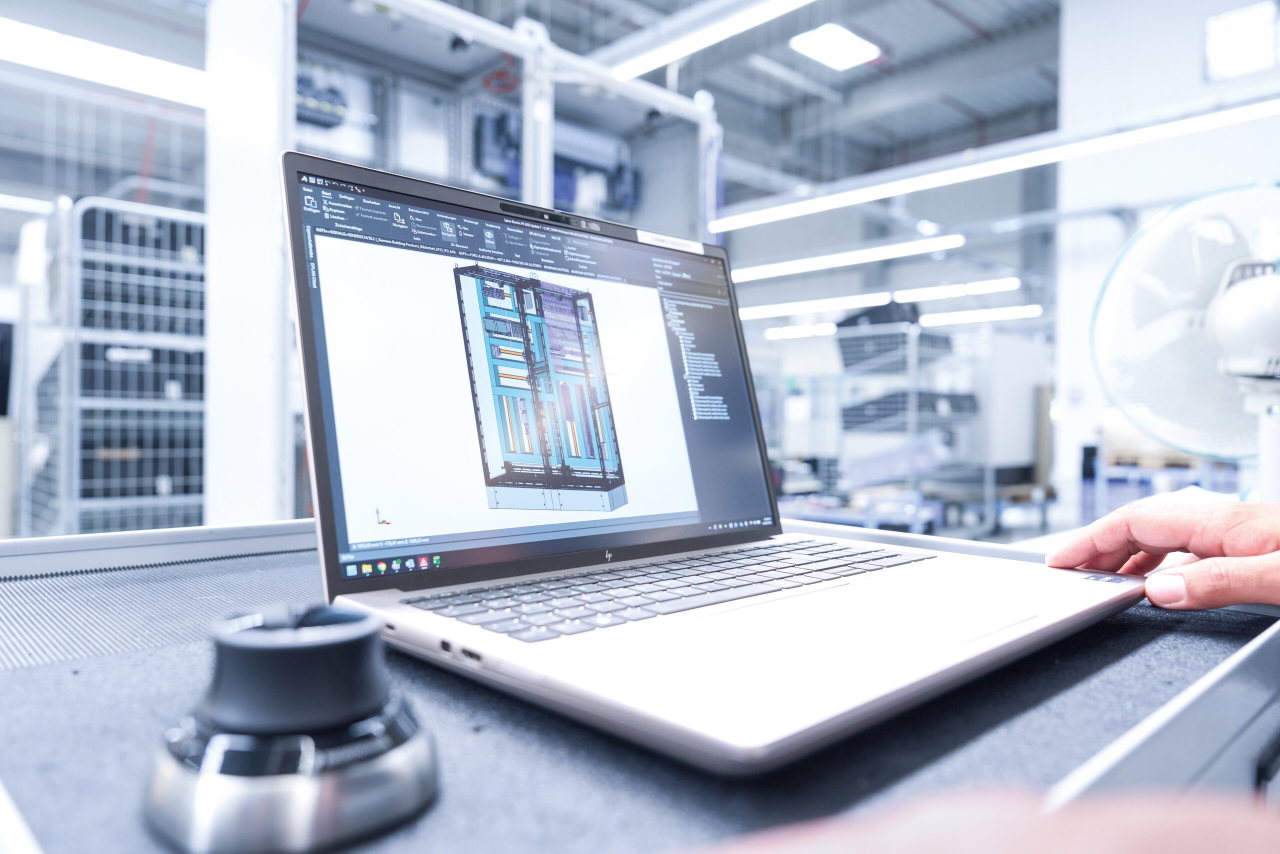
Right: Eplan Pro Panel is being used to plan the enclosures.
5 QUESTIONS FOR UWE ZIMMERMANN Vice President Design Engineering, Siemens WKC
WE FIRMLY BELIEVE ONLY DIGITAL CONTINUITY CAN ENSURE THE NECESSARY EFFECTIVENESS.”
Mr. Zimmermann, the WKC has a good reputation for planning and building enclosures for the machine tool industry. Why does the kind of work involved in building automation appeal to you?
We are continuously analyzing technical trends and growth potential to ensure balanced production, and we are seeing highly dynamic developments in markets such as infrastructure technology, e-mobility, battery and chip production, data centers, and — as it happens — building automation. We can adapt our machine tool manufacturing and automotive industry experience and put it to good use here.
What are the benefits for building automation companies that get the Siemens WKC to plan their enclosures?
Siemens is already well established in the building technology sector thanks to its Smart Infrastructure Building Technology division. Our customers benefit from obtaining large numbers of enclosures in automotive quality fast, and also from professional change management and high-quality documentation. That helps both planning and implementation teams — and ultimately the building users, too.
You use a dedicated Eplan data model for planning and production. Can you also adapt this digital twin to building automation?
As in other sectors, requirements aren’t always identical in industrial production, so we can adapt the data model very quickly to customers’ specific needs — and that also applies to building automation. We did the relevant groundwork, such as adapting to specific standards, because we firmly believe only digital continuity ensures the necessary effectiveness. In practice, we’re seeing time savings of between 15 and 20 percent for enclosure planning and production.
You handle projects in line with the industry standard Asset Administration Shell. Is that also suitable for building automation?
Yes, it is. In these projects, too, we work with function definitions that can be mapped in the Asset Administration Shell. Each device in the wiring diagram knows what it is and what it needs to do.
There is intense debate in the building technology sector about whether and how building operators continue working with planners’ data models. What’s your position on that?
In building automation projects, hundreds of devices are interconnected. If you map all that in one BIM model, the building operator will have all the documentation available and can develop this further and modify it. That’s a big plus for end users and for the operator, too — and it’s exactly what we’re working toward, together with the team from Siemens Smart Infrastructure.

Next article
Energy infrastructure
Preassembled grid connection units from Vensys Elektrotechnik are accelerating the build-out of vital energy infrastructure.

Friedhelm Loh Stiftung & Co. KG · Rudolf-Loh-Straße 1 · 35708 Haiger · Germany · betop@friedhelm-loh-group.com

© Friedhelm Loh Group 2026 · be top – Magazine of the Friedhelm Loh Group