Cover Story · Eaton
Becoming a
global lighthouse in just five years
How can you transform an enclosure manufacturing facility from a troubled factory into an internationally acclaimed flagship project in just five years?
Eaton in Changzhou provides the answer. The Chinese facility builds around 60,000 enclosures per year — with the right strategy and using the Eplan Platform.
Text: Gerald Scheffels
The initial situation back in 2015 was not a good one. The Eaton plant in Changzhou, which manufactures enclosures for the energy sector, was regarded internally as a “troubled factory”. The site was operating at a loss, and its performance lagged behind the average for plants in the global Eaton network in terms of productivity, safety, and quality.
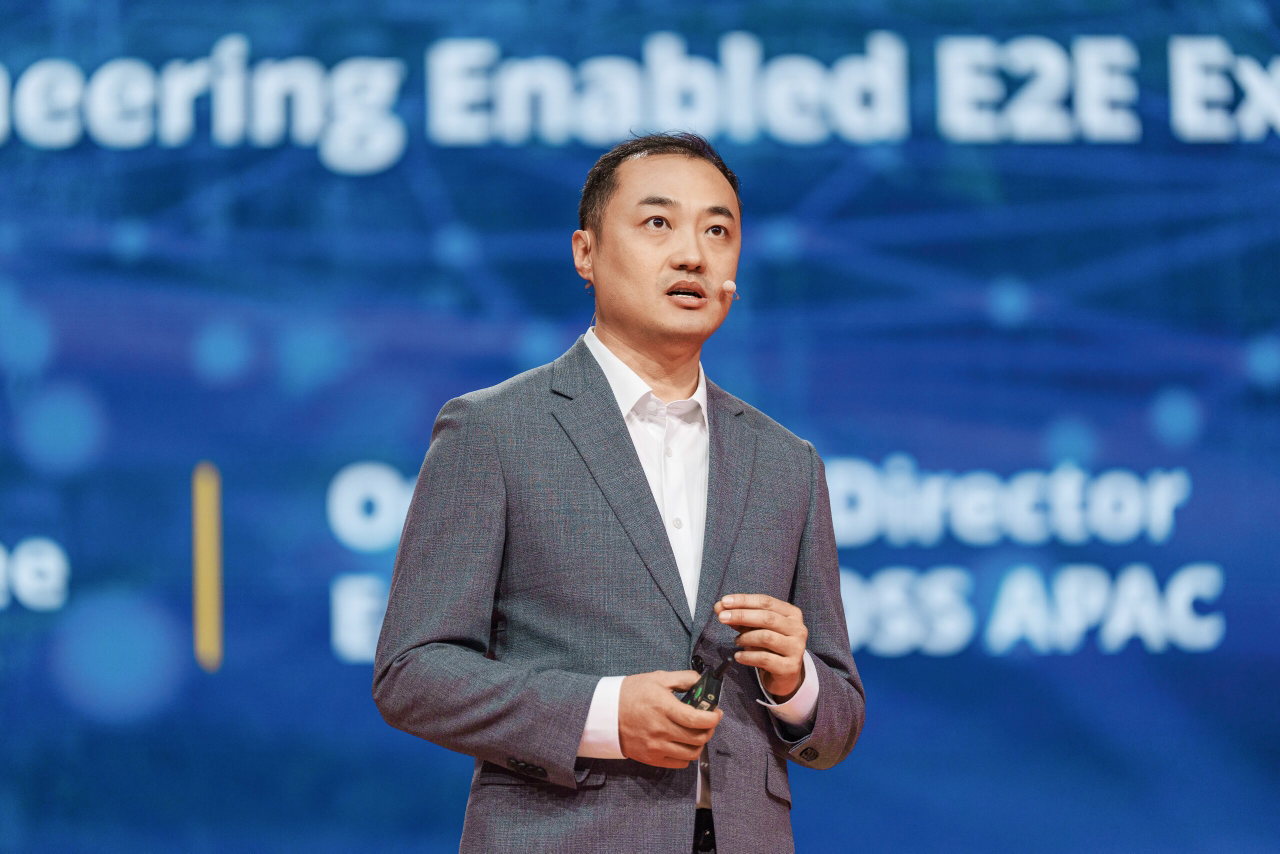
How could things be turned around? When small-scale measures failed to deliver any significant improvement, the management team decided in 2020 to restructure production operations. “A market analysis revealed that standardization is a strength of our competitors. However, the trend is toward ETO — engineer to order — so toward custom-built enclosures. And that’s exactly what we’re manufacturing now, with a fully digitalized design and production process,” explains Andy Lee, Operations Director Power Distribution Systems Asia Pacific at Eaton. The Eplan Platform was chosen by Eaton as the basis for this solution. The goal is end-to-end digitalization.
“The Eplan Platform has helped us reduce lead times by nearly 40 percent.”

Andy Lee
Operations Director Power Distribution Systems Asia Pacific, Eaton
Eplan Platform boosts performance
“In the space of five years, we’ve increased the Changzhou plant’s revenue by more than 200 percent and reduced lead times by nearly 40 percent — without taking on more staff,” Lee continues. What’s more, this was achieved despite far more complex “batch-size-one” manufacturing.
Such a big jump in revenue is only possible through a whole range of interlinked measures. At the very beginning of the process chain, Eaton digitalized the quote preparation process. “We start directly on the Eplan Platform and leverage standardized engineering data, reusable design modules and historical project information to support quotation engineering and proposal generation,” reveals Lee. This has shortened the time it takes the plant to prepare quotes, reduced the engineers’ workload, and also increased the quote acceptance rate.
Digital twin at the heart of it all
When a quote results in an order, there is now already a CAD data set in place that can be systematically used as a basis and continuously enriched in line with the digital twin concept. “We also use the design data for downstream systems such as ERP and MES. When the design data generated on the Eplan Platform is automatically fed into the machines cutting busbars to the correct length or assembling cables, for instance, this creates measurable added value and speeds up the production process,” Lee emphasizes.
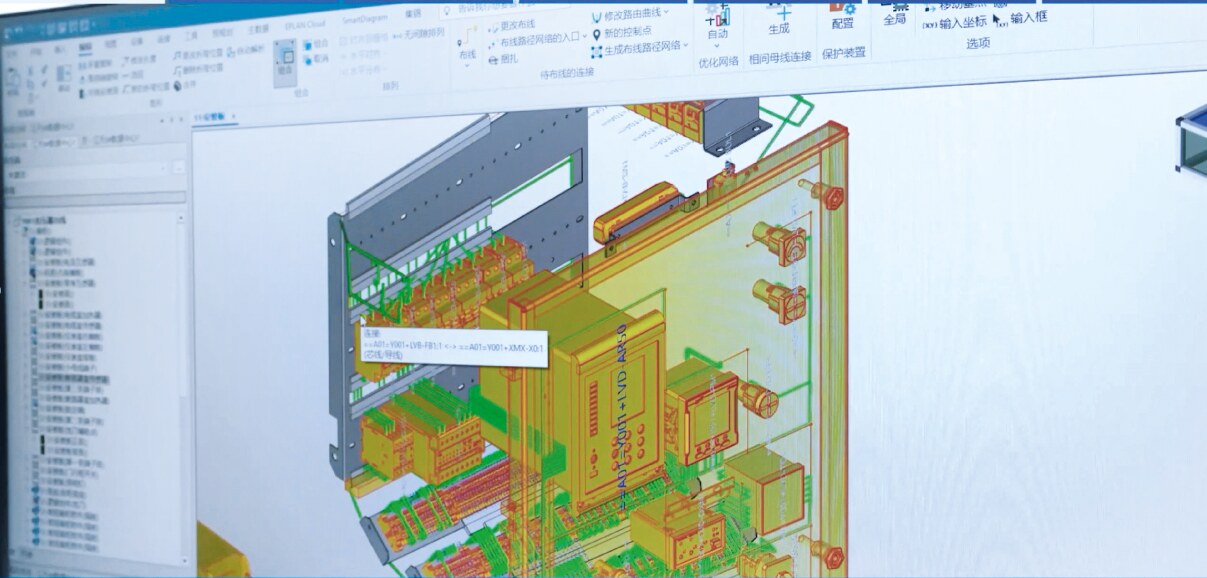
A CAD data set serves as a basis and is continuously enriched in the form of a digital twin.
Final inspection by robots
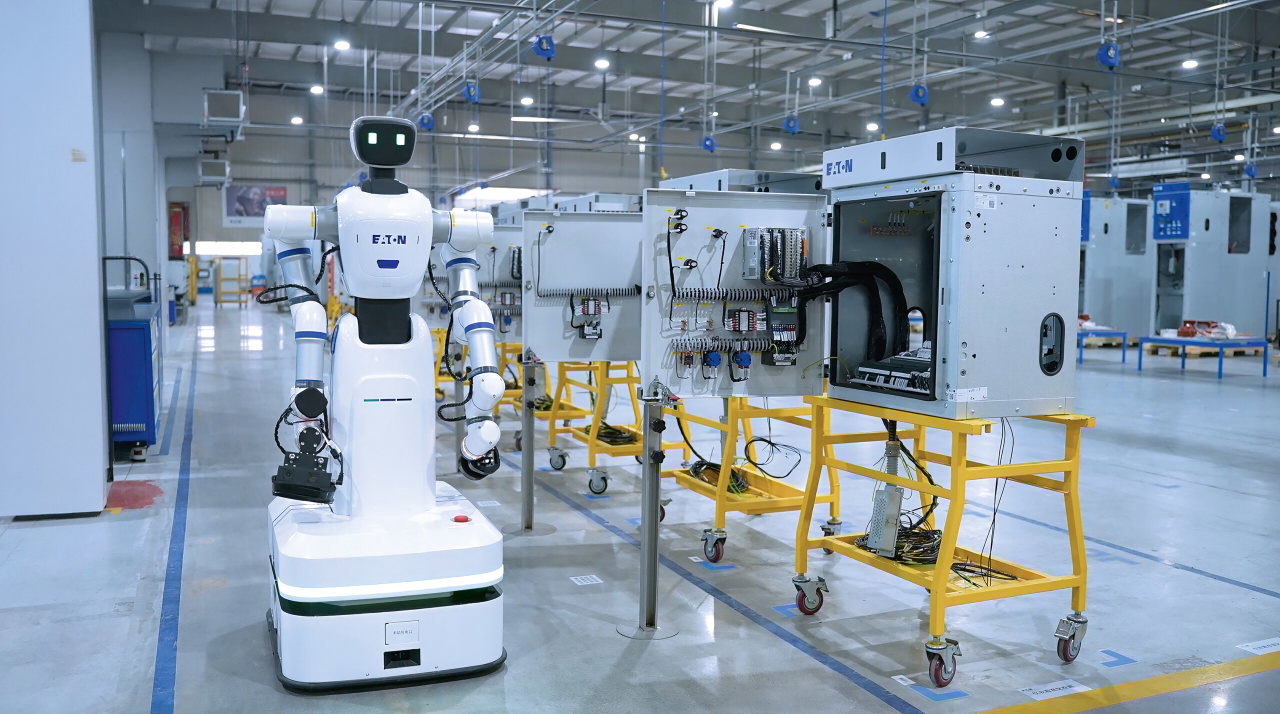
At the end of the process chain, Eaton has introduced another real highlight. During the final inspection of the finished enclosures, a humanoid robot equipped with a 3D camera checks approximately 30,000 connections per day — once again based on Eplan data. This has the advantage of reducing the inspection time by 90 percent.
As these examples show, Eaton has adopted the right strategy to transform enclosure manufacturing in Changzhou based on the Eplan Platform. Independent international experts agree. In 2024, the plant was selected to join the World Economic Forum’s Global Lighthouse Network as a smart factory.
Interview
People still play the key role
Mr. Lee, why did your management team start the transformation of enclosure manufacturing with the data platform rather than with new machines and equipment?
Because we firmly believe that, in assembly-intensive processes with batch sizes down to one, the primary goal should be end-to-end digitalization rather than automation.
What role does AI play in this context?
We use AI in numerous enclosure design processes, but in a very controlled way and primarily to compare reality with the design data. In our view, AI alone doesn’t solve any problems.
What role do people play?
They still play the key role. In terms of engineer-to-order business, people create the greatest added value. Our task is to free them up to focus on creative, value-adding work. And we’ve achieved that. Production at the plant has risen by 200 percent and lead times have been reduced by nearly 40 percent, without increasing the number of employees.

Friedhelm Loh Stiftung & Co. KG · Rudolf-Loh-Straße 1 · 35708 Haiger · Germany · betop@friedhelm-loh-group.com

© Friedhelm Loh Group 2026 · be top – Magazine of the Friedhelm Loh Group